 david coombe history
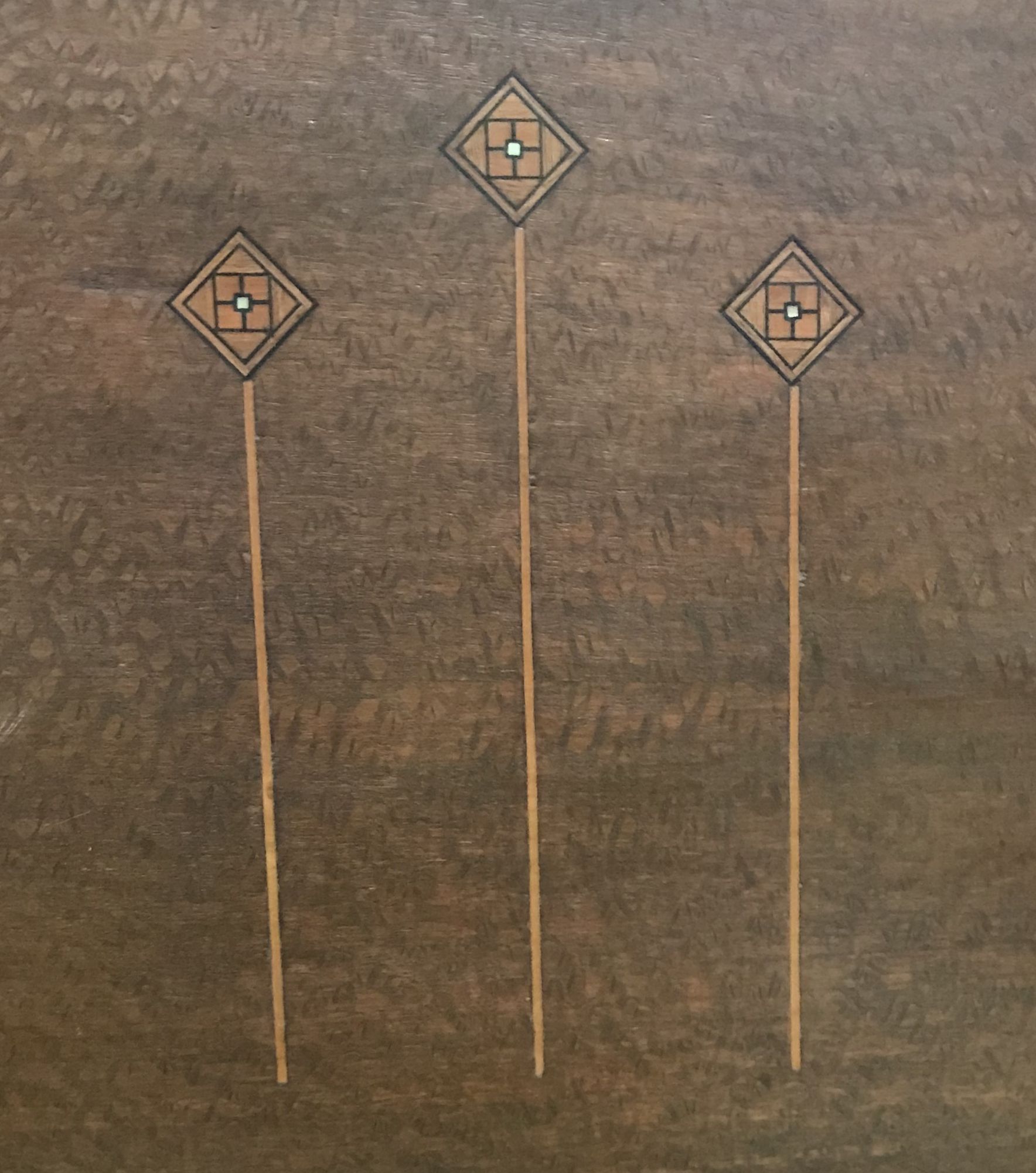
This four piece bedroom suite is in Australian silky oak timber and has simple but beautiful inlay / marquetry with a geometric "flowers" art deco design.
It was likely made by Standardised Furniture Ltd, Marrickville, Sydney and sold to my grandfather by the related retailer Symonds' of Pitt Street in early 1928.
This bedroom suite belonged to my late grandfather and was passed down to me. There are four pieces of furniture :
The suite is in Australian silky oak timber and has simple but beautiful inlay / marquetry with a geometric three "flower" design. The upper surfaces of the dressing table and pedestal are protected by contemporary plate glass tops.
(Note: My iPhone photos below don't always do justice to the warm colours of the silky oak.)
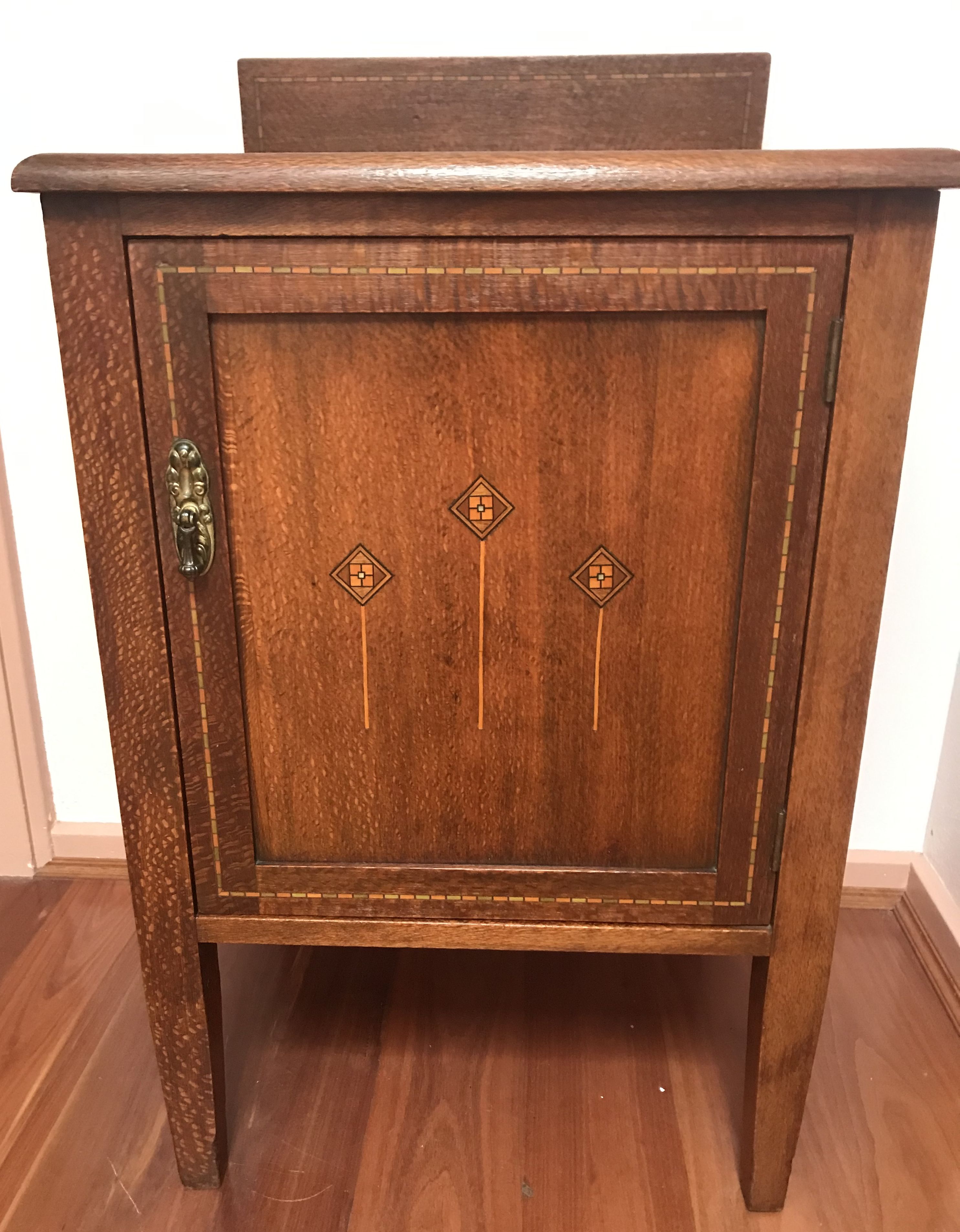
All the timber pieces are decorated with inlay / marquetry.
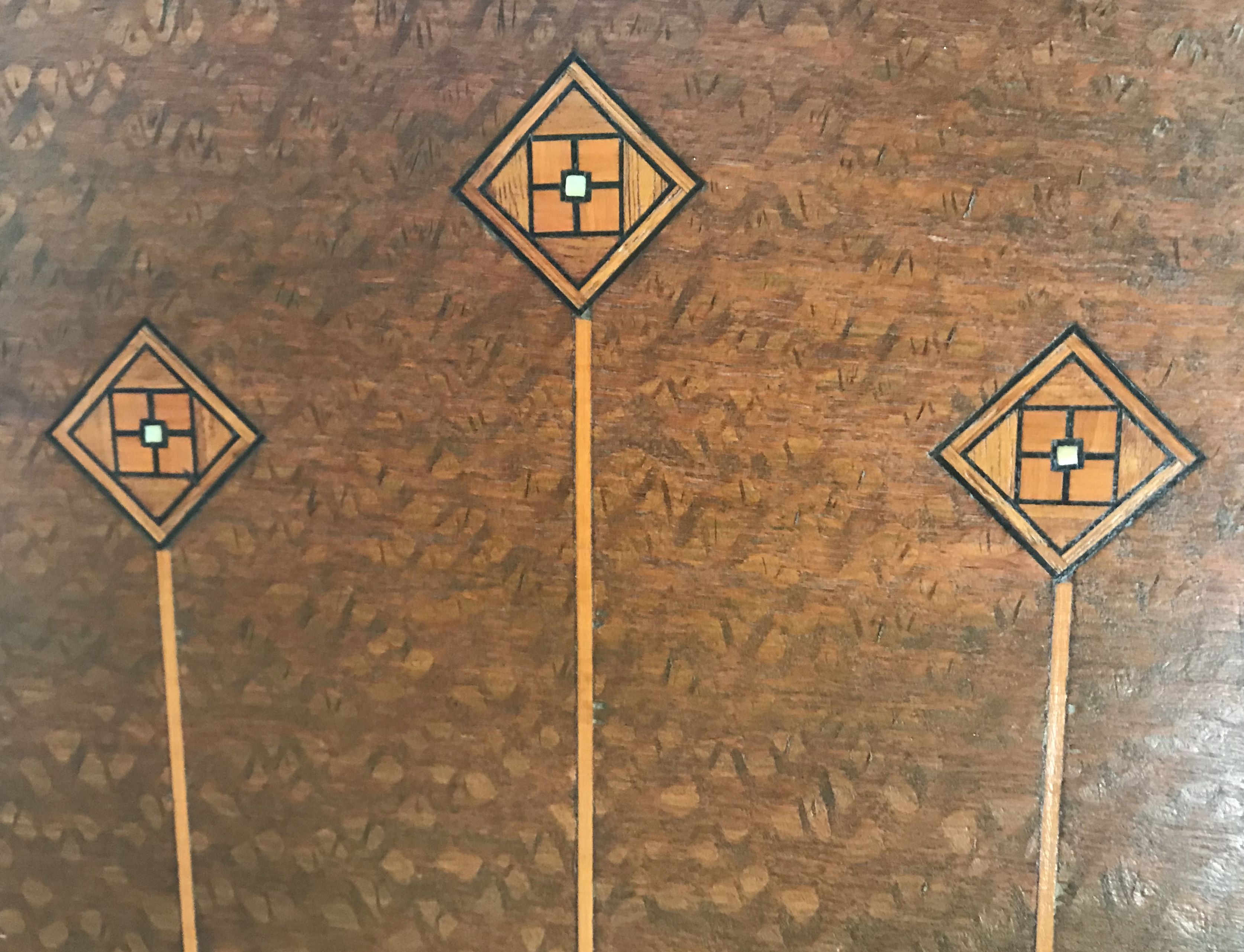 ← Click for larger image.
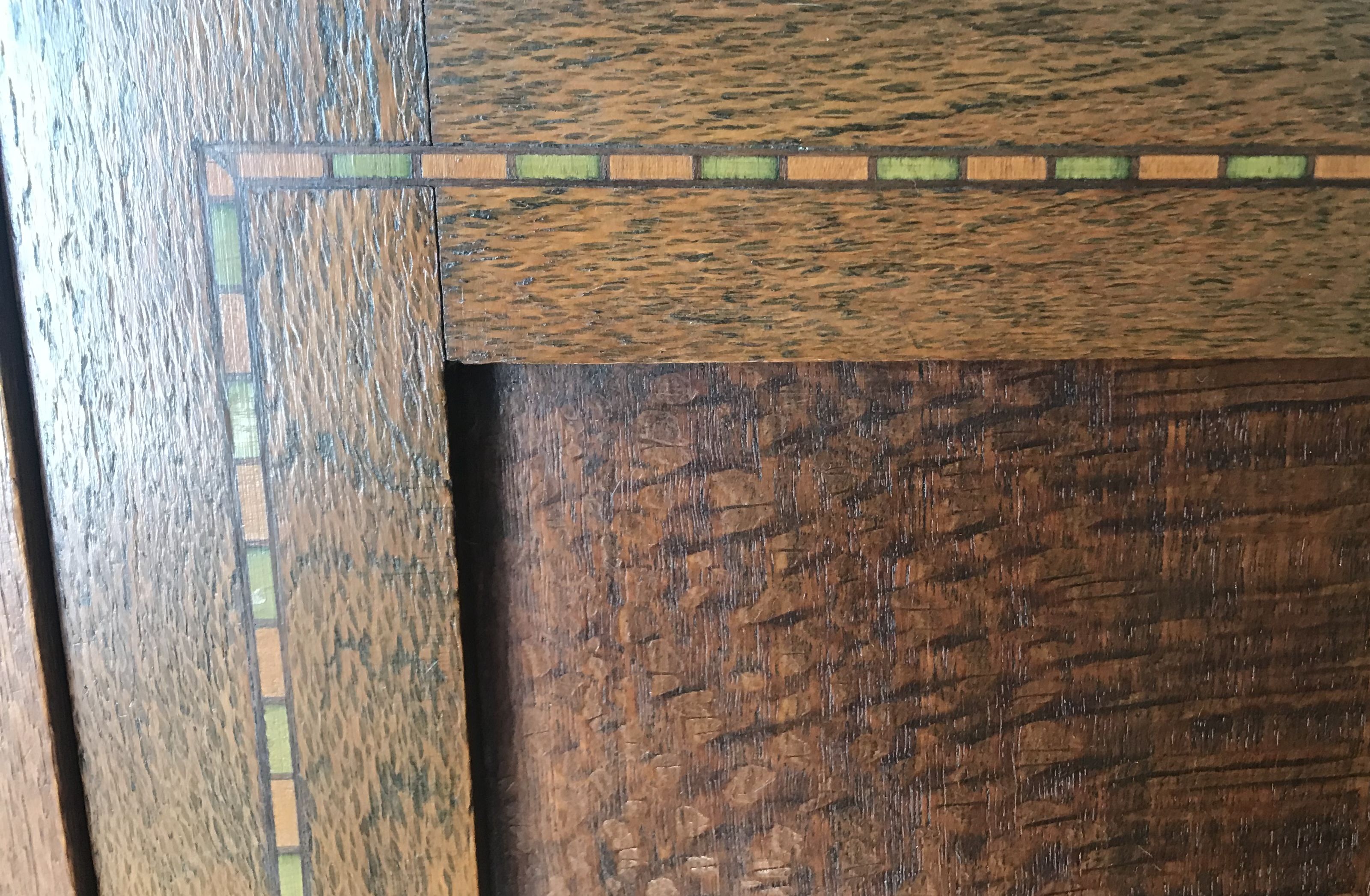 | Click for larger image. →
← Left: Detail of marquetry / inlay of geometric three "flower" design that appears on the bed-head, bed-end and pedestal.
Right: Detail of coloured linear marquetry / inlay that appears on the fronts of the wardrobe, dressing table and pedestal. →
 ← Click for larger image.
 | Click for larger image. →
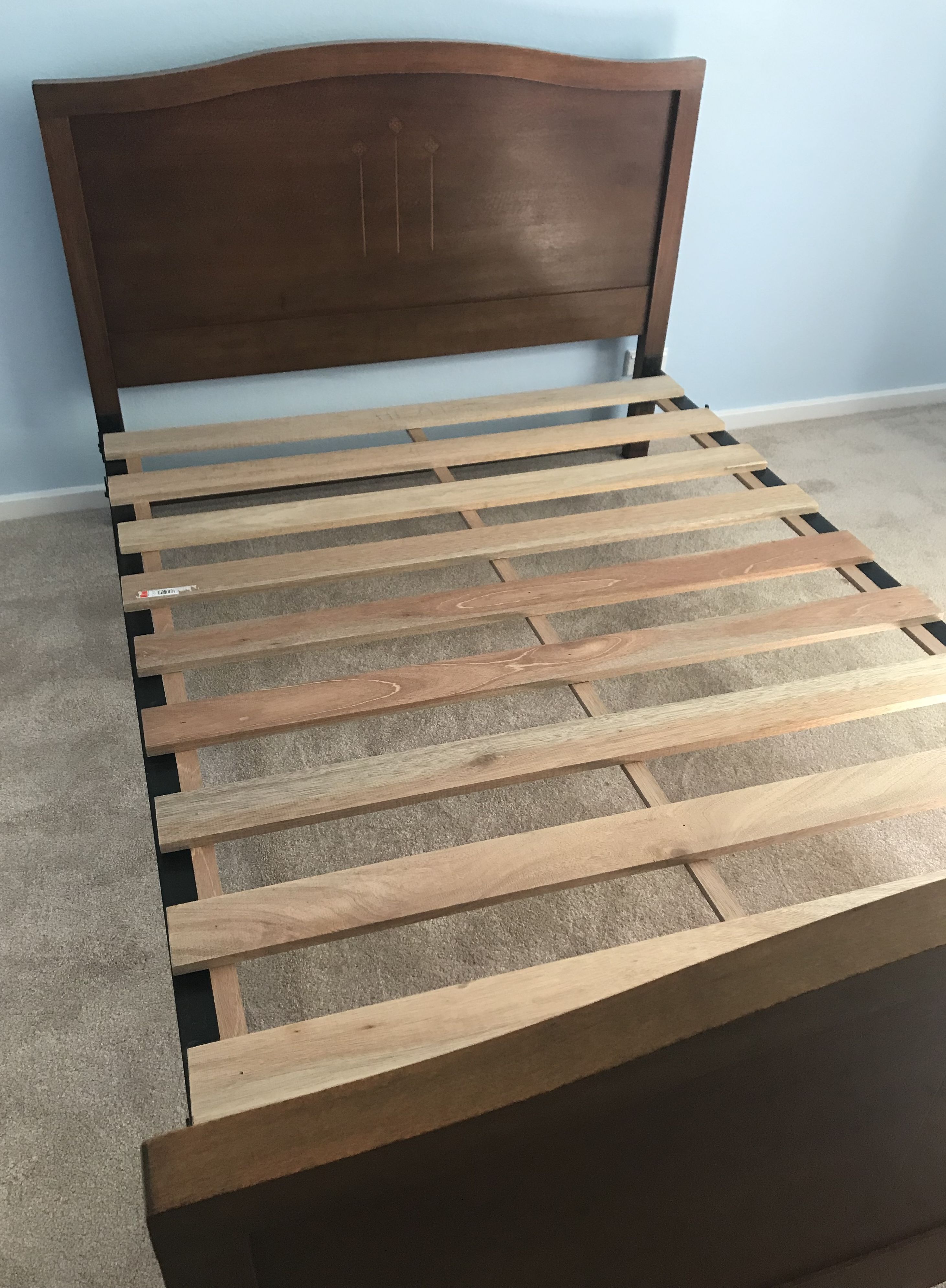
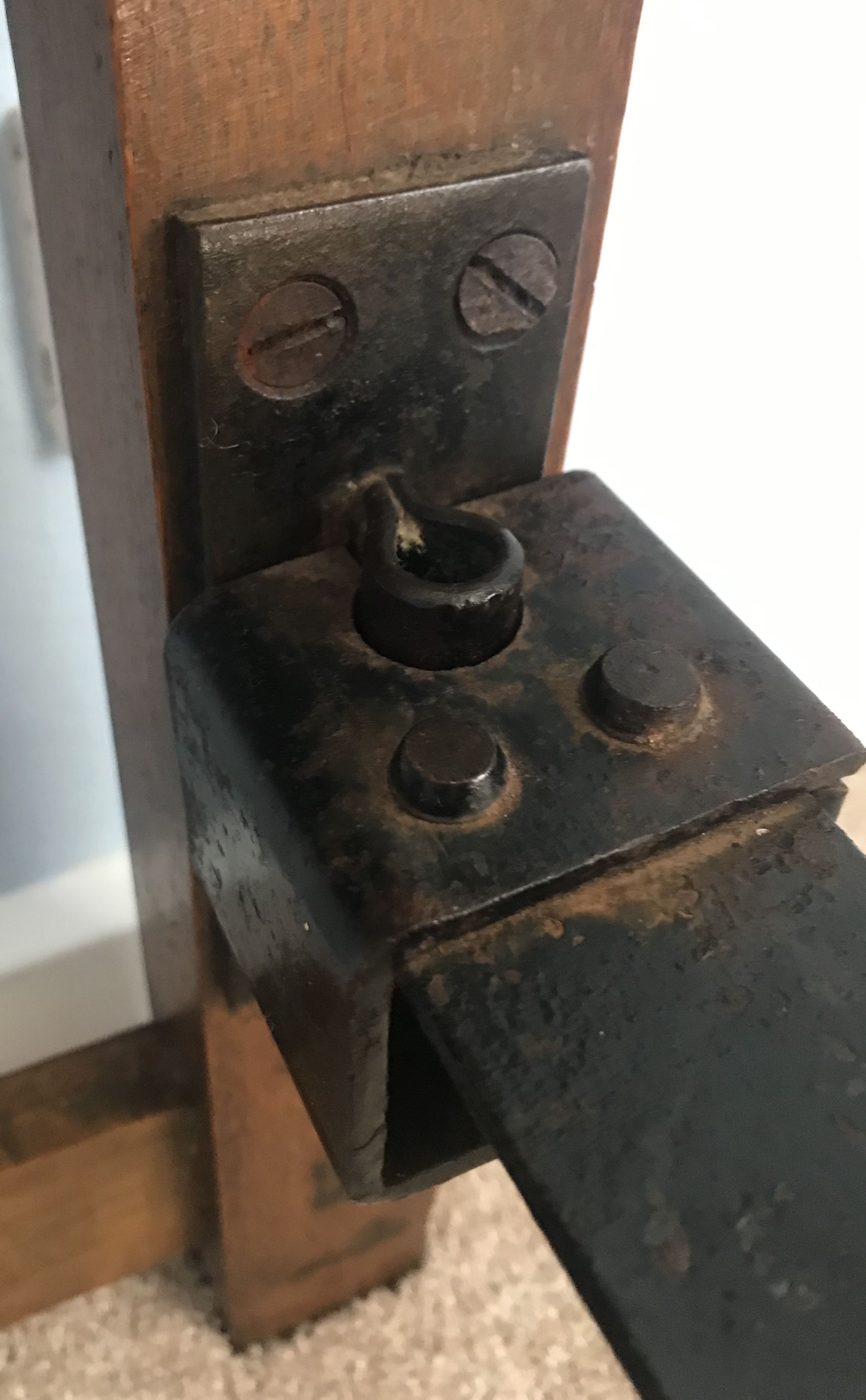
The bed consists of a separate bed-head, bed-end, and two steel side rails. The inlaid "flower" design appears on both the bed-head and bed-end.
For easy assembling the side rails simply drop onto small posts on the bed-head and bed-end. (See image at right.) The bed can be dismantled quickly without any tools, with exception perhaps of a mallet or a block of wood to knock the rails up off the posts.
The bed originally had a timber framed mattress. I made a new timber slat base which sits on and within the frame and is retained by four original metal tabs. A new double mattress sits comfortably on the slat base.
Dimensions (approximate). Bed: 6ft. 8½in. (204cm) long; 4ft. 6in. (137cm) wide; 3ft. 4in. (101cm) high at bed-head.
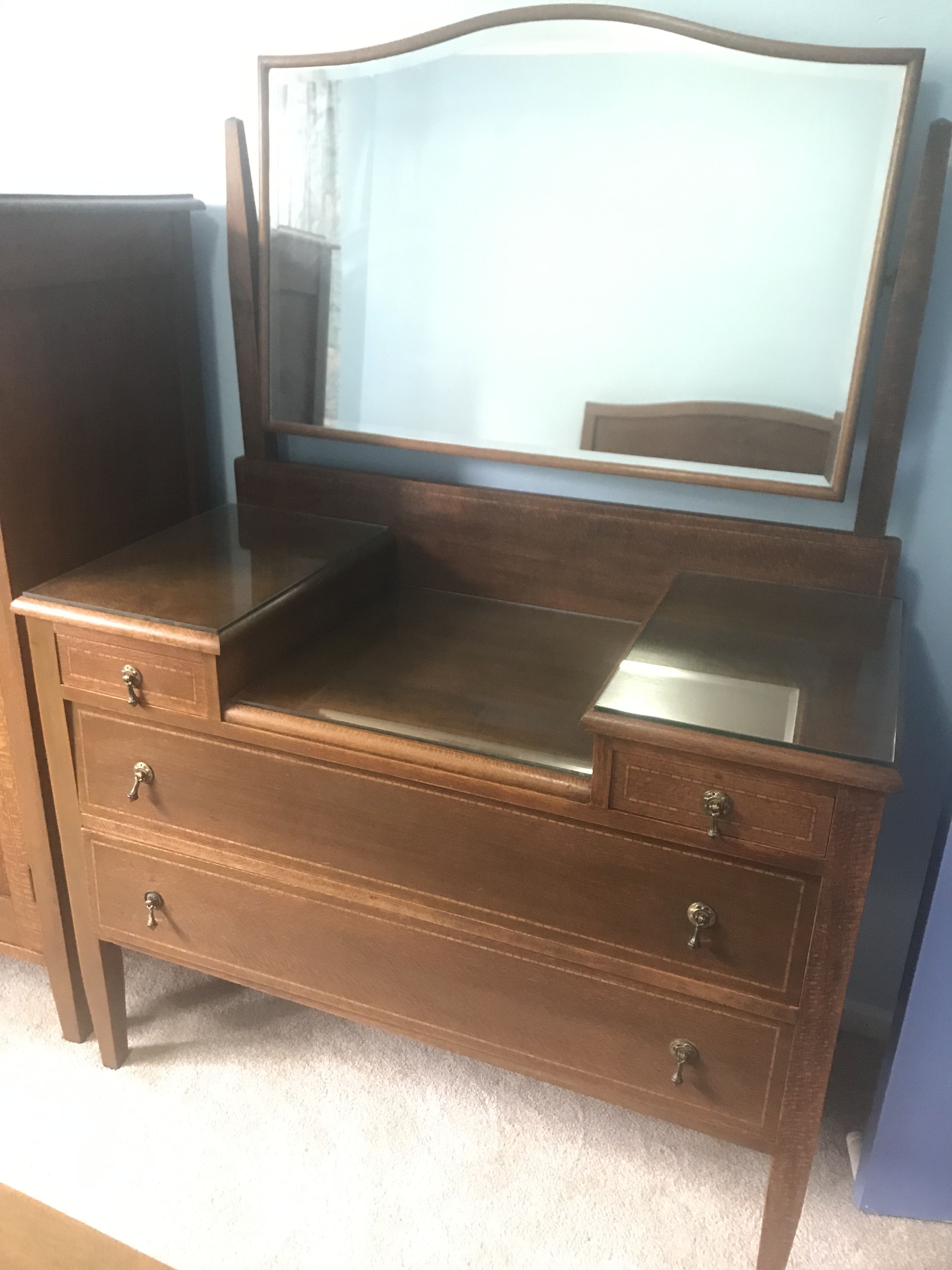
The "dip centre" or "drop centre" dressing / toilet table has a shaped bevelled swing mirror 33½in. x 21½in., two jewel drawers and two long drawers. It also has plate glass tops for the surfaces.
Dimensions (approximate). 3ft. 7in. (109cm) wide; 1ft. 8in. (51cm) deep; 5ft. 0in. (152cm) high (at mirror top).
 ← Click for larger image.
 | Click for larger image. →
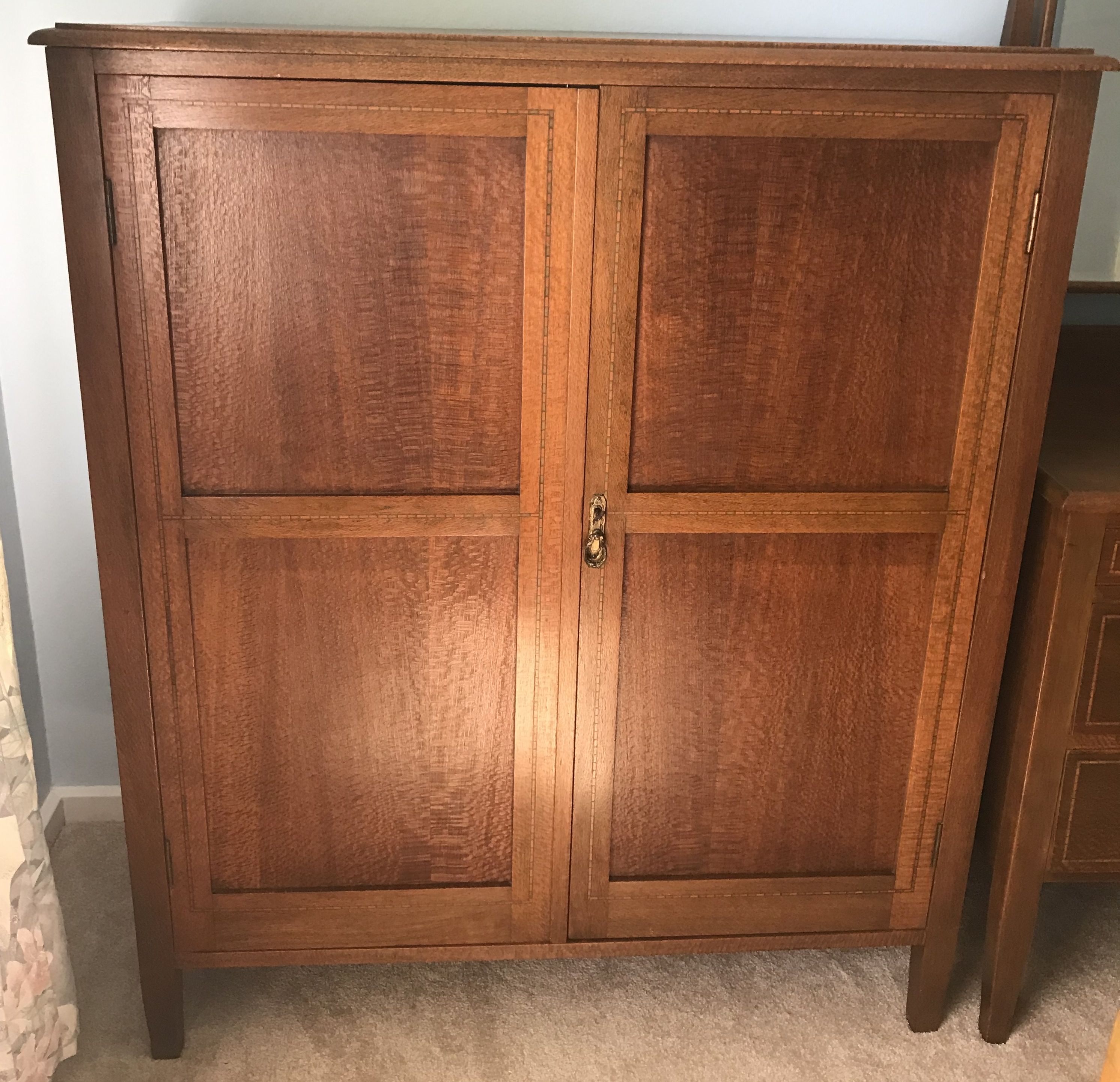
This is a 3ft. 6in. (wide) "gent's wardrobe".
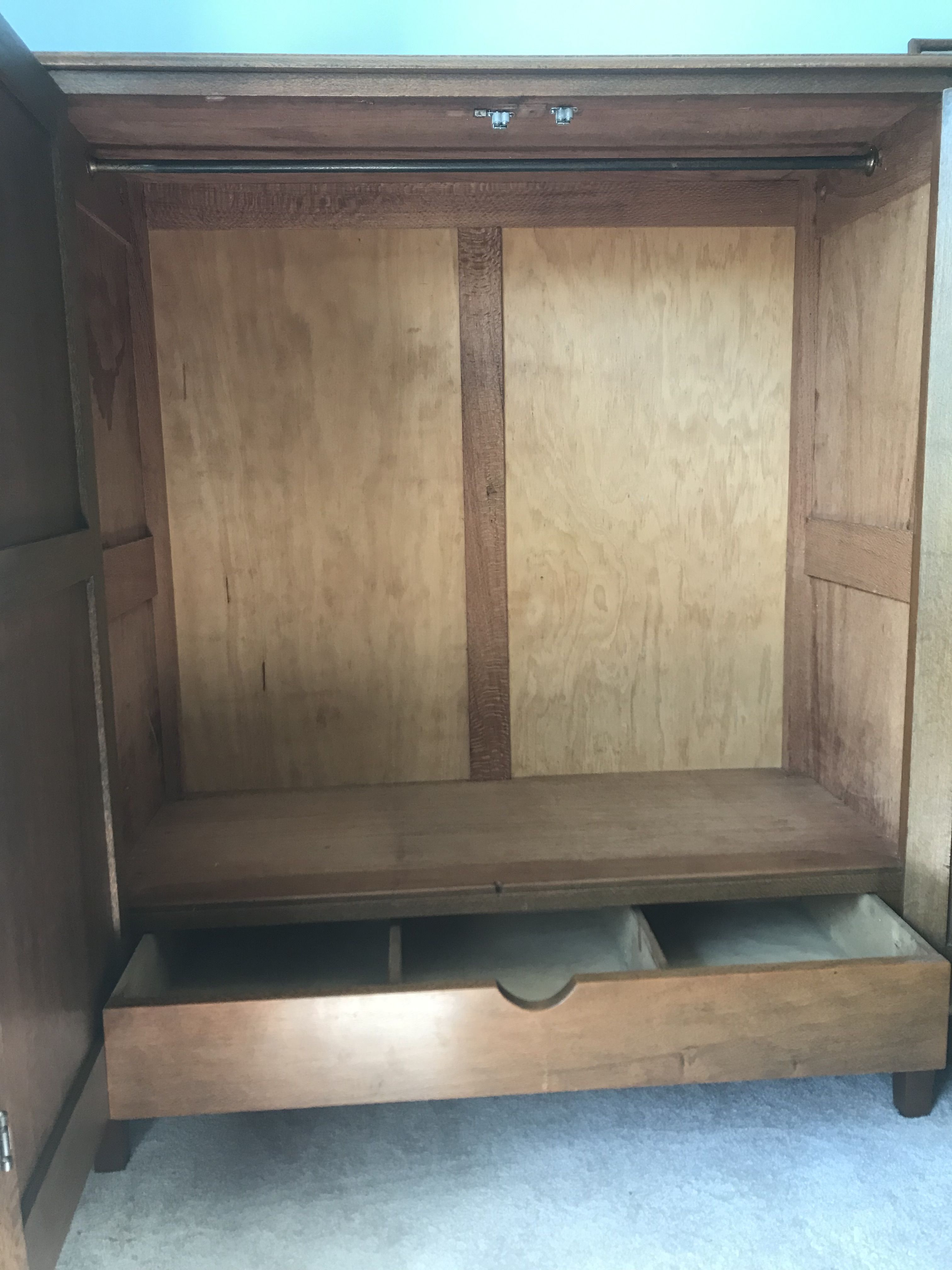
Inside is a hanging rail and a bottom drawer 4¼in. deep with three compartments each about 11¼in. wide. It has a keyed lock.
A removable shelf can be easily dropped into the middle, creating shelving space instead of hanging space. (There is a removable shelf, but it is a late addition and not original.)
Dimensions (approximate). 3ft. 6in. (107cm) wide; 4ft. 3in. (129cm) high; 1ft. 6½in. (47cm) deep.
(This style of wardrobe seems to have lost out in favour of later wardrobes that were taller and had three front panels and a centre mirror.)
The pedestal (bedside unit) has a middle shelf and a plate glass top (not shown in this photo). The inlaid "flower" and linear designs appear on the front.
Dimensions (approximate). 2ft. 6in. (76cm) high; 1ft. 8½in. (52cm) wide; 1ft. 5½in. (44cm) deep.
On the back of the wardrobe are two identical stamps reading "L.B / SYD", the significance of which is unknown.
Contemporary newspaper advertisements and furniture catalogues show many pieces and suites similar to my grandfather's, but none identical.
By far the best evidence for identification came from the geometric three "flowers" inlay design.
Left: The three "flowers" design on the bed-head. It is also on the bed-end and pedestal.
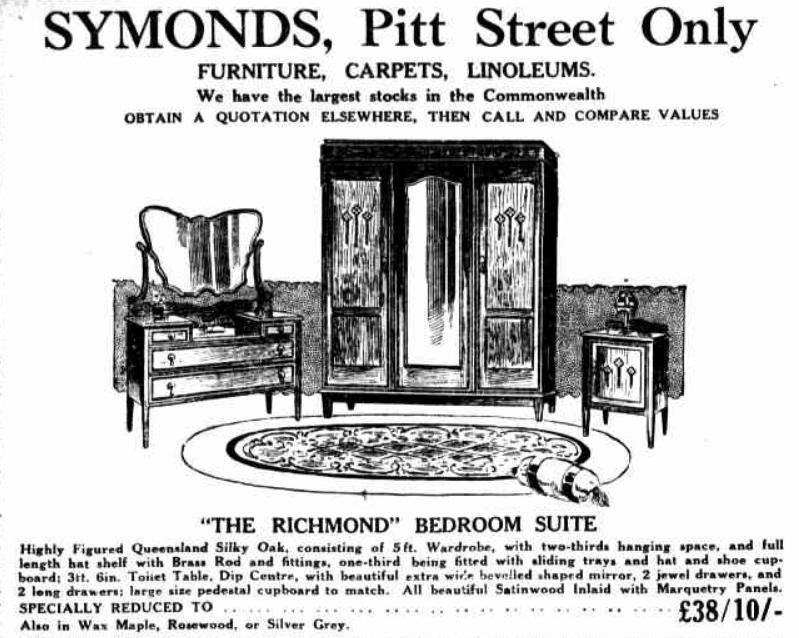
The very same design motif appeared in advertisements by Symonds' of Pitt Street, Sydney, for "The Richmond" Bedroom Suite over two months: March 1928 and April 1928.
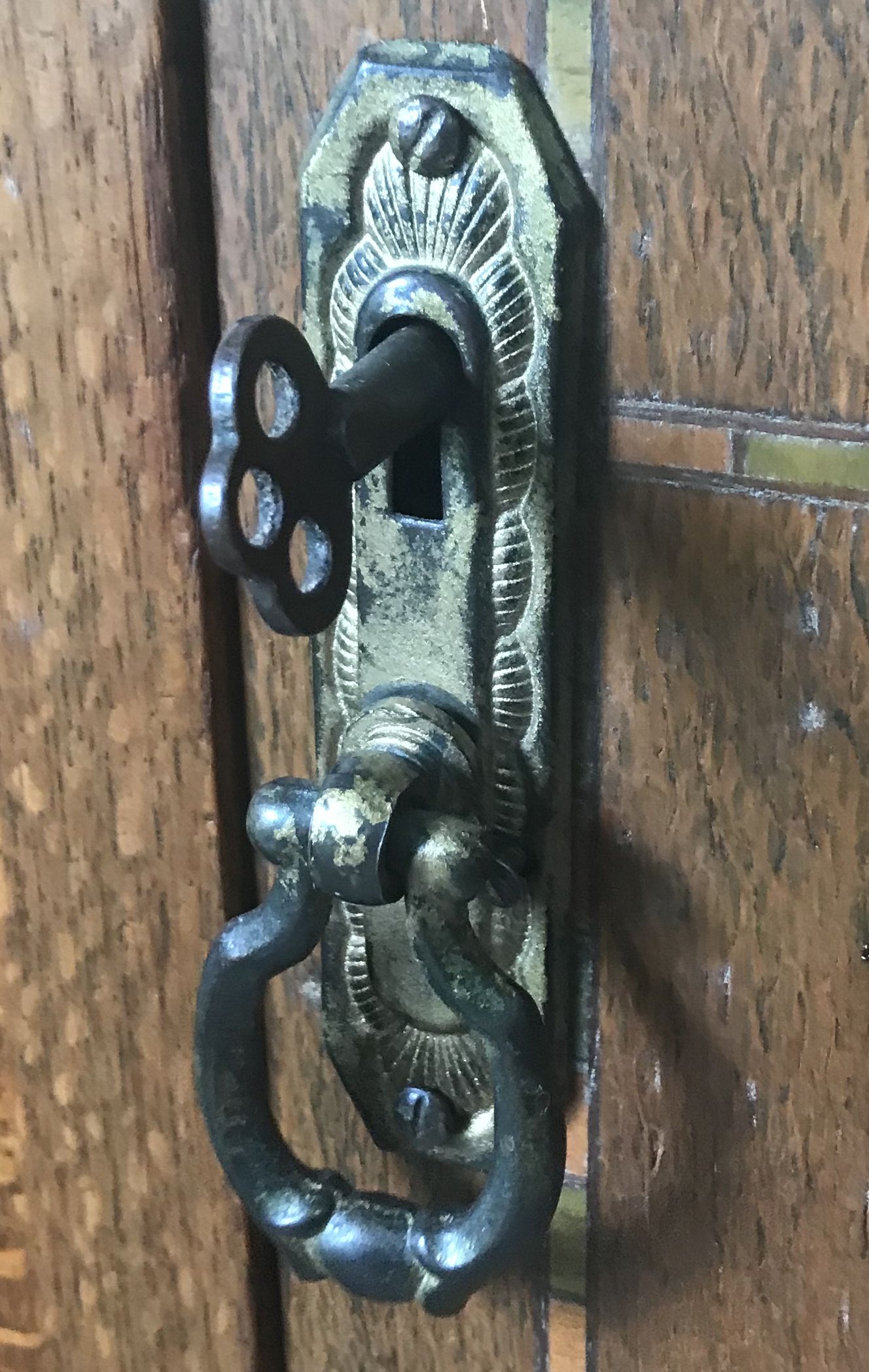
"The Richmond" Bedroom Suite. Despite the butterfly shaped mirror and the larger wardrobe, significantly, the dressing table is the same uncommon "dip centre" or "drop centre" design and the handle hardware looks the same as my grandfather's. A bed was not mentioned. It appears "The Richmond" superceded "The Camden" (which also appears in the March advertisment), both names alluding to the Hawkesbury-Nepean area.
Just a few months previous, in December 1927, a Sydney newspaper noted Symonds' "remarkably fine" display at the Australian Manufacturers' Exhibition at Moore Park:
True, most furniture manufacturers have certain lines of ordinary demand that are more or less standardised for factory convenience, but it was the promoter of Standardised Furniture, Ltd., Mr. Ralph Symonds, of Marrickville, New South Wales, who has exploited the idea with supreme success. His beautiful samples of workmanship at the show – the first exhibit of the kind in New South Wales – are well above the scope of a mere series of plainly similar designs and sizes ready and suitable for construction to represent furniture subjects. It is revealed that all varieties of household and office furniture can be evolved on highly artistic and utility lines with a restricted number of patterns.
Symonds was the manager of Standardised Furniture Ltd.
The Sydney Morning Herald also reported on Symonds' and Standardised Furniture's exhibit:
STANDARDISED FURNITURE, LTD.Much time may be pleasantly spent in inspecting the exhibit of Standardised Furniture, Ltd., a Sydney concern, which manufactures high-grade panels for building work, which may also be used for furniture. This standardisation in furniture-making holds many surprises for the uninitiated, and the class of work that is turned out to pattern and the innumerable uses to which a single pattern may be put are a source of wonder, as is the high standard of workmanship that is attained. The examples of marquetry work shown are delightful, and lend themselves especially well to bedroom furniture. Two workmen may be seen at work at the exhibit, which should interest all architects, builders, and prospective home furnishers.
This early success by Symonds and Standardised Furniture was ended within months by a fire that completely destroyed their Marrickville factory in May 1928.
My grandfather also bought protective plate glass for his bedroom suite.
The Brisbane Courier (19 April 1928) ran an advertisement for James Campbell's plate glass (for protecting furniture surfaces). Incidentally, below Campbell's advertisement is another for Tritton's "Superb bedroom Suite in Selected richly polished silky oak" which is similar in style to my grandfather's suite. It included a "4ft. Wardrobe, 3ft. 6in. Duchess Chest, 2ft. Pedestal ... bevelled mirror ... 4ft. 6in. Double Bedstead."
On 5 December 1927 my grandfather and his then wife returned to Sydney following a trip to England and Europe that took most of that year. A week later, the Sydney press acknowledged Ralph Symonds and his Standardised Furniture Ltd at the Australian Manufacturers' Exhibition for combining artistry and utility by bringing beautiful design to factory furniture with Australian timbers. An example of this marrying was "The Richmond" bedroom suite advertised by Symonds' in March and April 1928.
My grandfather's suite is very similar to "The Richmond", with notably the three "flowers" inlay, and was likely bought by him at that time together with a matching bed. These events point to my grandfather having bought his bedroom suite new from Symonds' around the early months of 1928.
The silky oak timber is likely from Queensland.
My grandfather's suite compares closely with several items in the catalogue Furniture & furnishings by F. Tritton Limited (viewable 131Mb pdf) at State Library of Queensland (SLQ), notably:
The catalogue bears no date but the State Library estimates it to be around 1930. It shows a range of period styles.
David Coombe, 2024. Original 9 December 2024. Version: 2024-12-12. | photos and text copyright (except where indicated).
CITE THIS: David Coombe, 2024, Bedroom Suite - Silky Oak - Manufactured Sydney circa 1927/28, accessed dd mmm yyyy, <https://coombe.id.au/personal/bedroom-suite.htm>
 Click for larger image.
 Click for larger image.
 ← Click for larger image.
 ← Click for larger image.