 david coombe | history
An online catalogue of S.T. Gill's early colonial works from his arrival in South Australia in December 1839 up to his early time at the Victorian gold rush in 1852-1853.
In this article ...
This is a select catalogue of S.T. Gill's early colonial works. The scope is from Gill's arrival in South Australia in December 1839 up to his early time at the Victorian gold rush and the publication in March 1853 of the tinted lithograph Forest Creek, Mount Alexander. The scope is generally limited to the works held in public institutions.
This scope was substantially completed in February 2026.
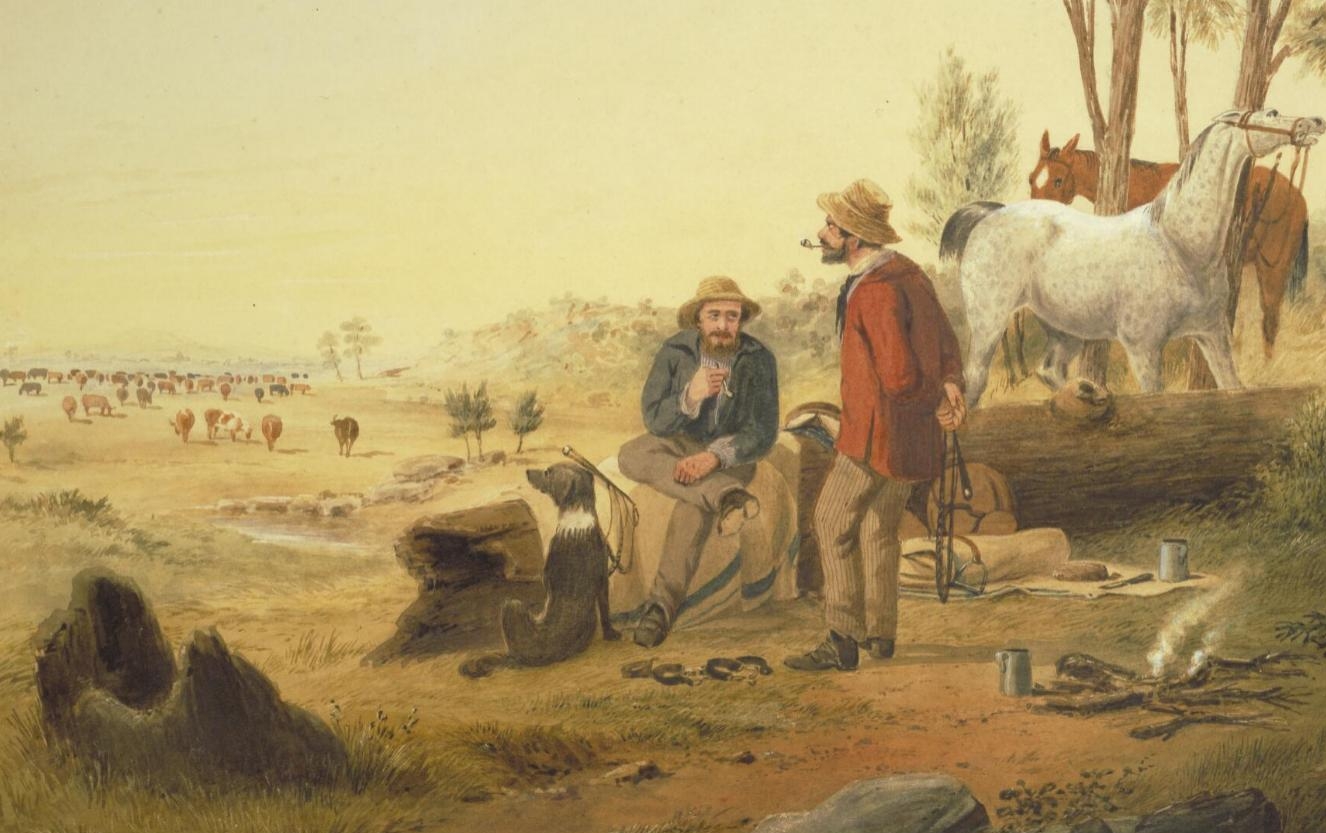 (Left) Detail from NLA nla.obj-134355141 with stockmen and cattle dog.
A traditional catalogue raisonné – a "reasoned catalogue" – is usually self-contained; it can be in book or digital form.
This catalogue may best be thought of as a supra-catalogue – an extra online layer sitting above the catalogues of collecting institutions.
There are several reasons for the scope ending at the March 1853 lithograph. The period corresponds with:
This project itself is broader than the catalogue, sometimes extending beyond the catalogue scope and documenting other works. All documented works are included in the Index of Works which includes many related works by other artists, as well as book plates based on known Gill originals. (A small number of works are yet to be documented.) The project as a whole integrates catalogue, narrative and analytical articles with interactive online maps. For various ways of accessing project content, see: List of Lists.
As an original research project, this catalogue sometimes differs from the institution catalogues – mostly the date of the work, or sometimes inscriptions or context.
I also differ from previous authorities in occasionally re-attributing authorship from other artists to Gill (in particular from G.F. Angas and W.A. Cawthorne). I explain the rational in these cases and note the artist as "Gill, S.T. (attr.)."
This project owes much to the 1986 catalogue of Appleyard, Fargher and Radford (reference below). I had several reasons for revisiting their anaylsis:
Appleyard et. al. supported an exhibition. They did not style their work as a catalogue raisonné and their scope was confined to South Australian watercolours and lithographs but excluding wash drawings.
Appleyard grouped works mostly on a thematic basis:
For a cross-reference of Appleyard's catalogue with this project; see: Cross References - Appleyard and Bowden.
The table below shows the number of works in the catalogue by owner. (Table last updated: 2026-07-08.)
| Owner | Catalogued |
|---|---|
| Art Gallery of South Australia (AGSA) | 91 |
| Burra Regional Art Gallery (Burra RAG) | 4 |
| Flinders University (Flinders) | 1 |
| National Gallery of Australia (NGA) | 25 |
| National Library of Australia (NLA) | 142 |
| Private collection (Private) | 4 |
| South Australian Museum (SAM) | 1 |
| State Library of New South Wales (SLNSW) | 28 |
| Dixson Library, State Library of New South Wales (SLNSW-DL) | 12 |
| Mitchell Library, State Library of New South Wales (SLNSW-M) | 19 |
| State Library of South Australia (SLSA) | 29 |
| State Library Victoria (SLV) | 27 |
| Owner unknown (Unknown) | 2 |
| Work untraced (Untraced) | 11 |
| TOTAL | 396 |
A catalogue raisonné is typically presented in chronological order. On the other hand, several modern online catalogue raisonnés are accessed directly using search crtiteria.
In this catalogue each work is placed in a catalogue group based on date, client and purpose of execution. Such context helps us better understand the art and artist. The groups sometimes overlap in time. (It wasn't always possible to achieve neat groupings, so there are some broader groups of convenience.)
Listed below are all catalogue groups and works.
Listed first is an Overview: Catalogue Groups. Following that is Detail: Catalogue Groups and Works. The detail section lists each art work, together with a link to its description on the catalogue group web page from where there is a further link to the art work in the collecting institution catalogue.
You can scroll down to browse the full catalogue or use your browser's search function to find a work by a word in the title or the work's call number / reference number.
There are 43 catalogue groups.
They are listed in general chronological order. Click on the group link below to jump down to a list of works in the group and links to the related web page article, or just scroll through to browse.

Works by S.T. Gill in the period 1839 to 1844, not included elsewhere in the catalogue.
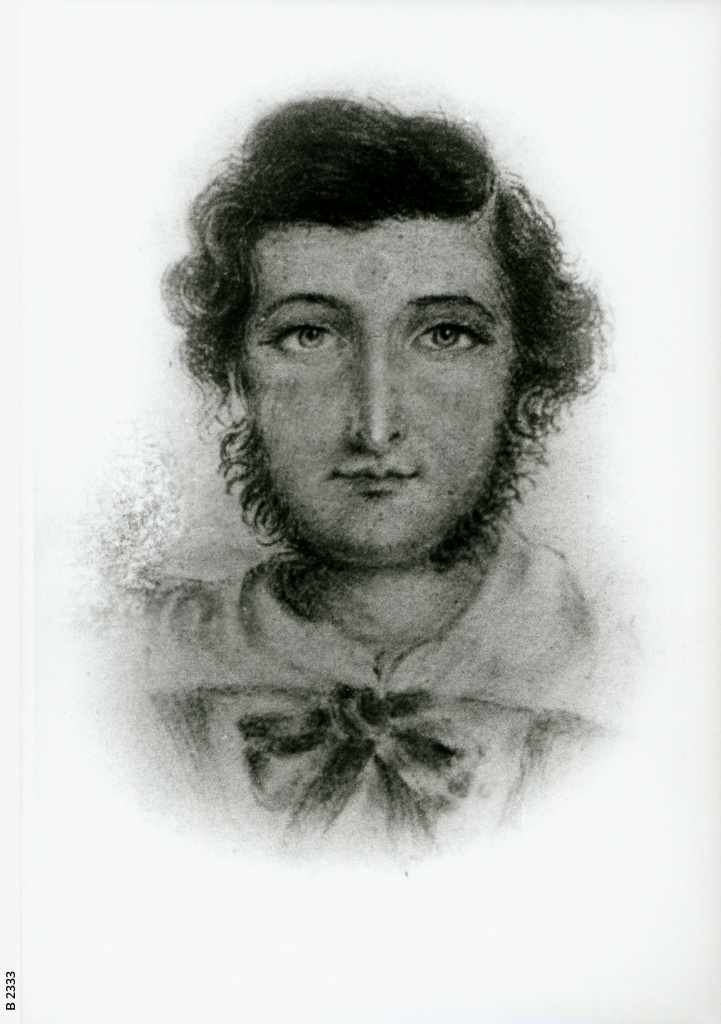
1840. Two portraits of John Ainsworth Horrocks known only by early black and white photographs. I attribute them to Gill and date them to early 1840.
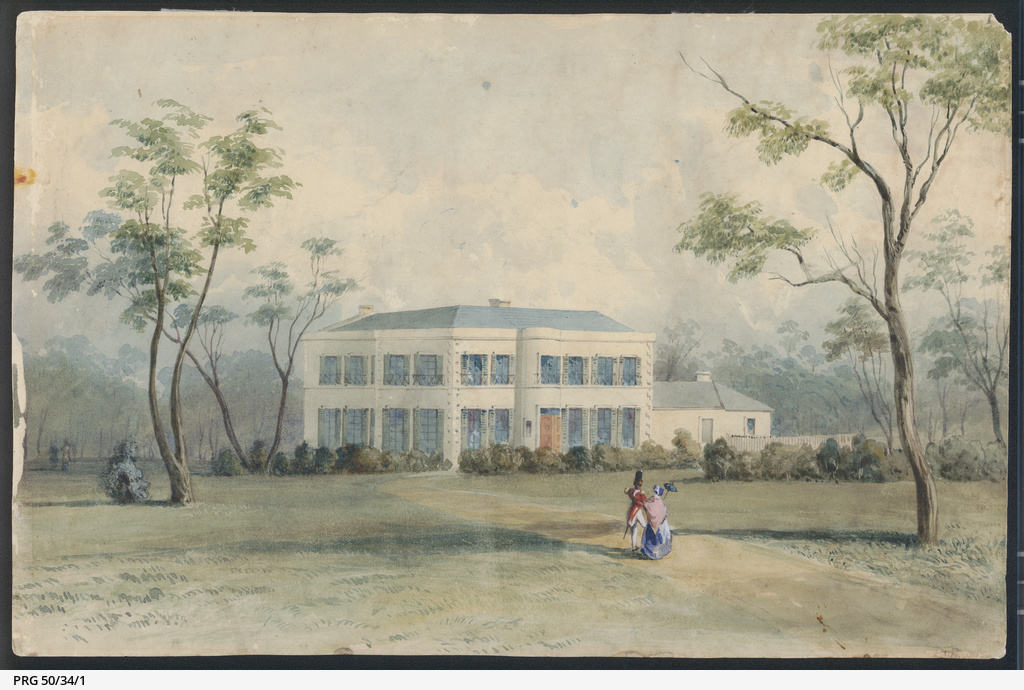
Previously attributed to Governor George Gawler, this is by Gill for Gawler in 1840/1841. The earliest known picture of new Government House. It's before Gill developed his typical foreground doodling and busyness of characters.
1840/1846. Simple postcard sized wash drawings labelled 'Series of Adelaide Views' and numbered (on the back) showing the built environment of Adelaide and the Port.

H. C. Jervis made engravings in Adelaide of landmark buildings in 1841-1842. Initials C.W.C on them became an art history red herring. More likely they're based on originals by S. T. Gill. There are links too with the 1842 Kingston map.
1844~. Set of 8 wash drawings of South Australian scenes - natural, Aboriginal, rural and the built environment, corresponding with subjects in J.F. Bennett's book. Plus other related works.
Lieutenant John Napier Magill (1819-1848), 96th Regiment, posted to South Australia 1842-1846. Magill was a flautist and artist, painting views of Flinders Street barracks. Gill watercolours for Magill and Captain W.D. Chard.

S. T. Gill was in the Barossa sketching for the Angas family from 29 October to 4 November 1844. I identify some works as well as influences on Angas publications 'South Australia Illustrated' and 'Barossa Range and its neighbourhood'.
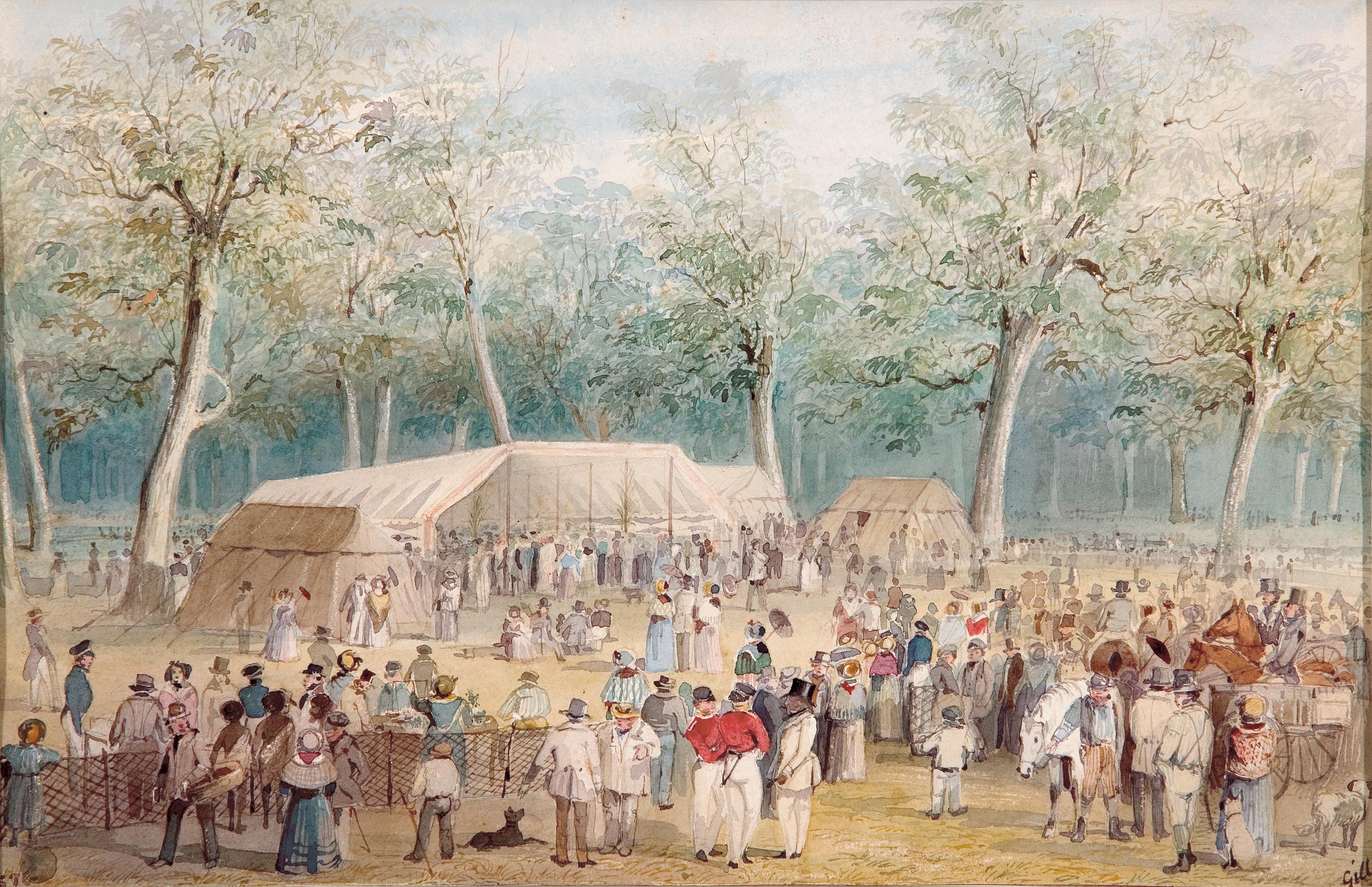
1844/1845. Watercolours for Captain E.C. Frome, Surveyor General and Colonial Engineer.
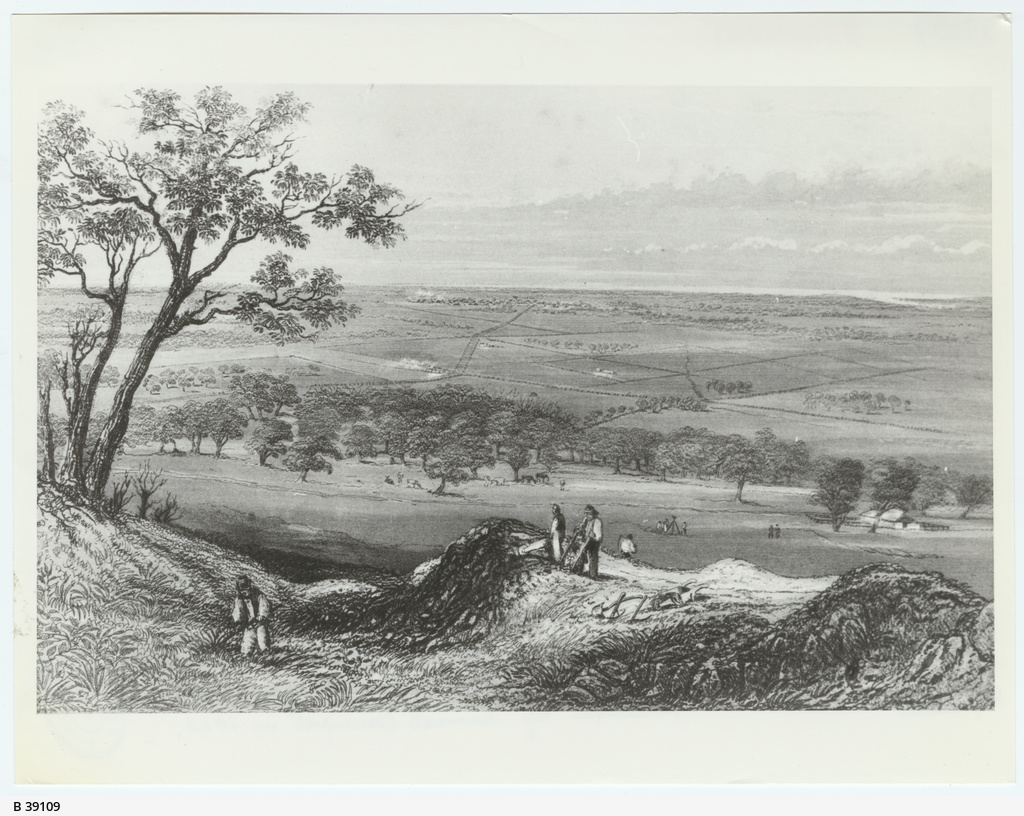
Works by S.T. Gill in the period 1844 to 1846, not elsewhere included in the catalogue.

On 16 December 1844 explorer Edward John Eyre departs Adelaide on the barque 'Symmetry' for England, taking with him paintings by Gill.

WA Cawthorne (1824-1897): school teacher, amateur artist, documenter of Aboriginal culture. George French Angas' 'South Australia Illustrated'. The relationship with Gill, his art master from February 1845.
Analysis of a pencil sketch of the German village of Klemzig. A comparison of the Klemzig pictures of F.R. Nixon, G. F. Angas and S.T. Gill. I re-attribute the sketch from Angas to Gill, revealing more of the collaboration between them.
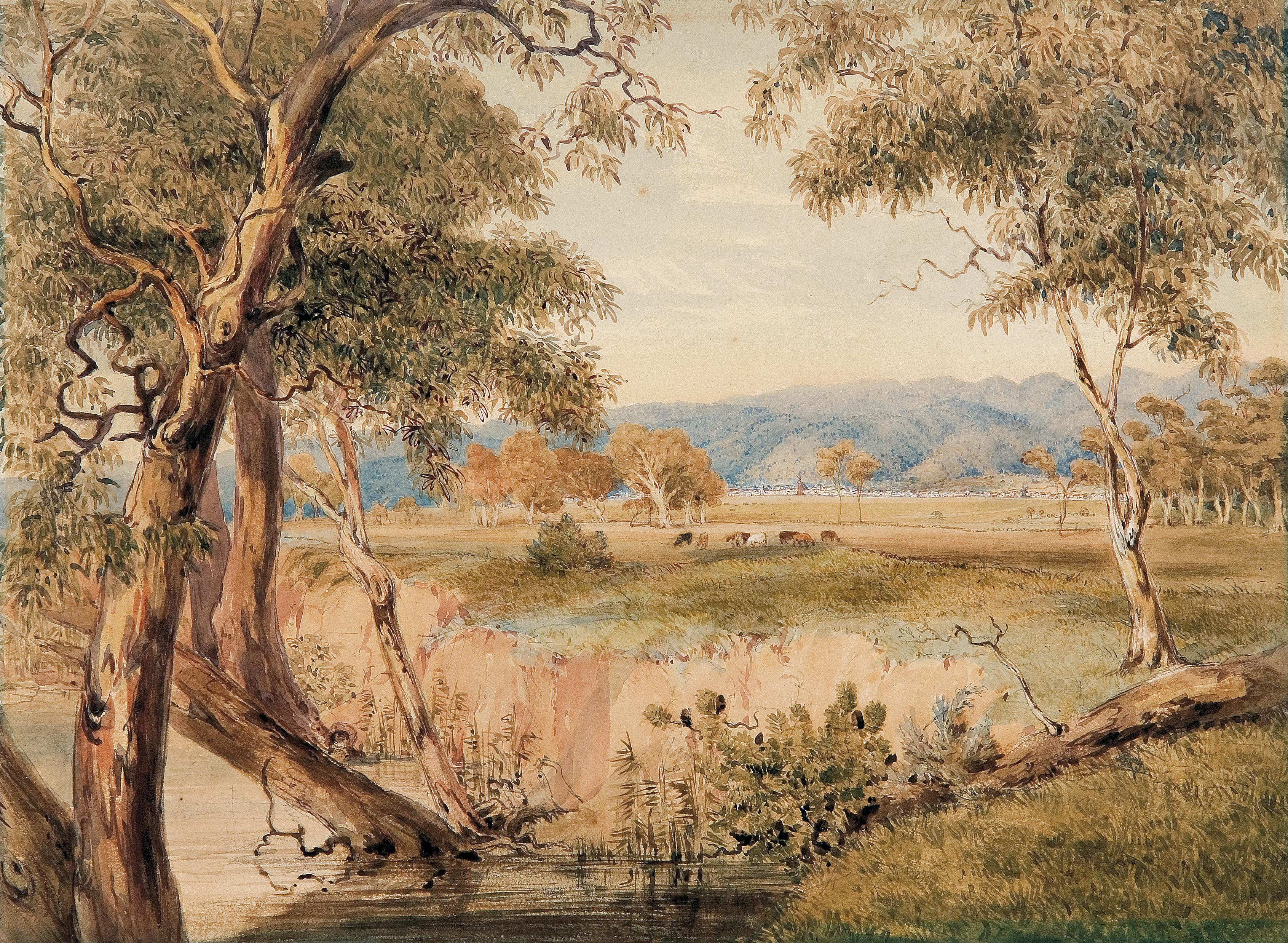
1844-45. George French Angas made a splash in South Australia in two visits (interrupted by a trip to New Zealand). He left on 2 July 1845, a fortnight after his art exhibition and its associated controversy.
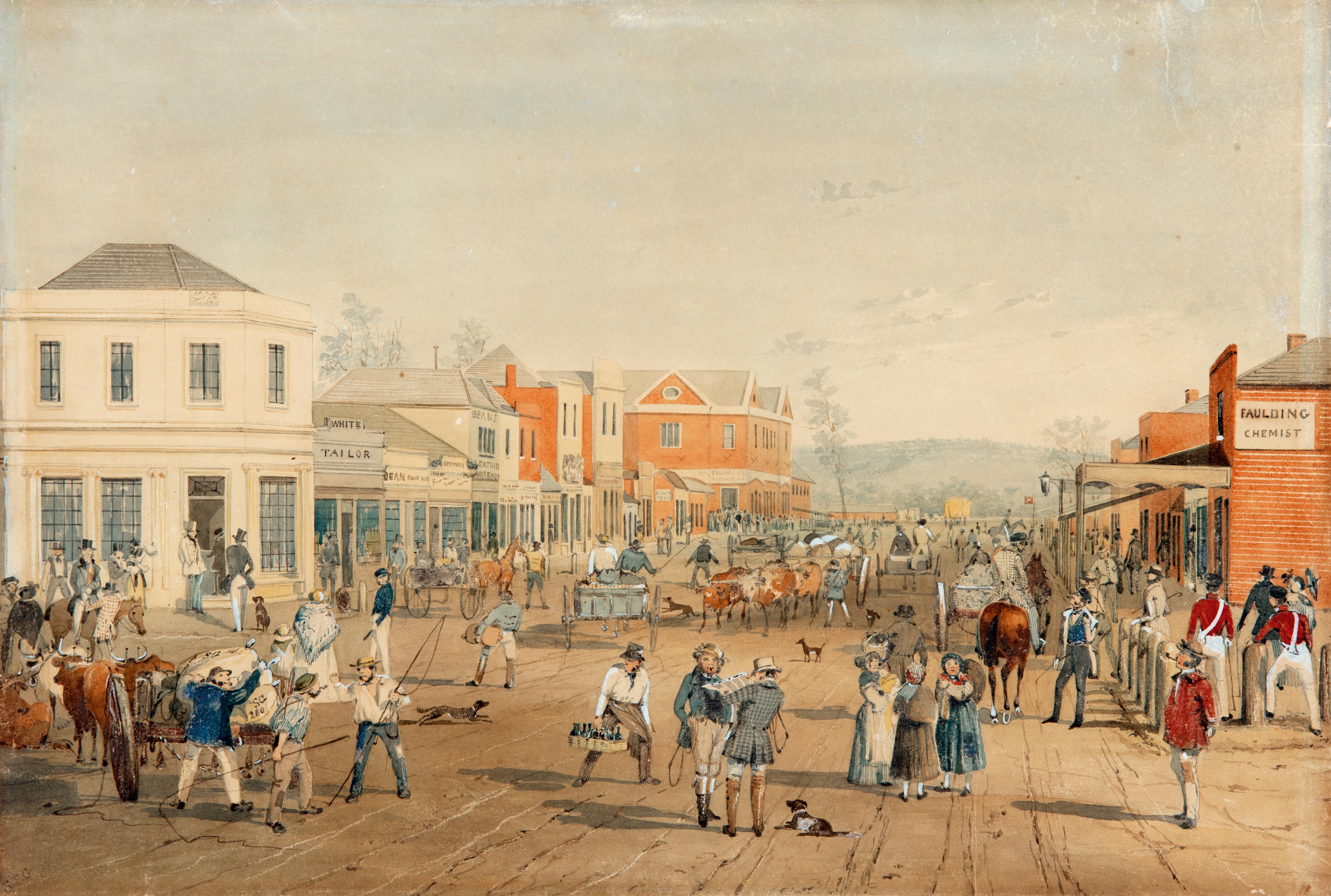
September-November 1845. Series of watercolours and wash drawings commissioned by James Allen for his 1846 promotional lecture tour of England.
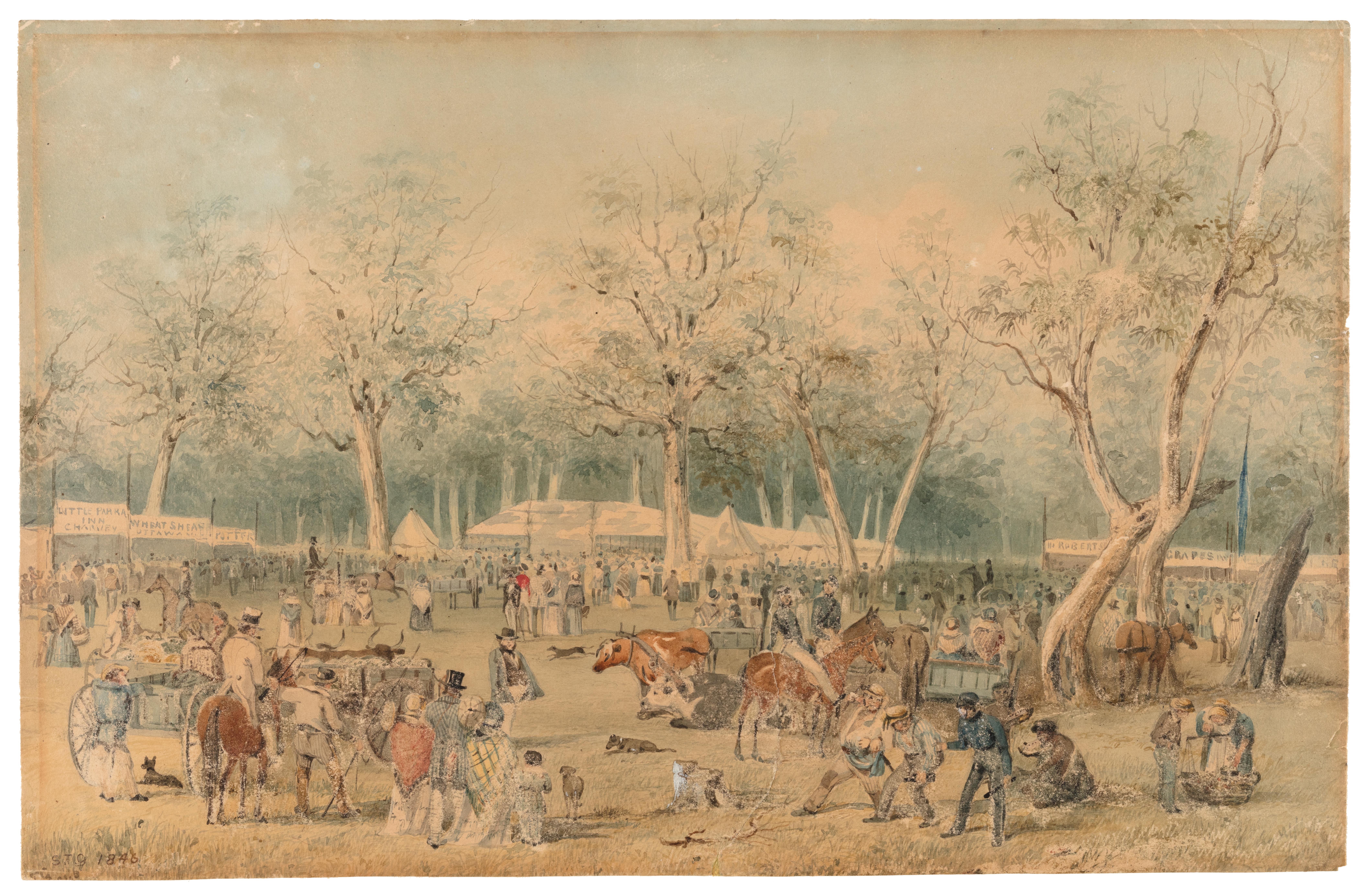
After the commission for James Allen and South Australian Company, in November 1845 Gill briefly trialled Daguerreotype (photography). Little is known about what he did next, up until the time he left on Horrocks' expedition in July 1846.

1844/1846. Eliezer Levi Montefiore – businessman and Gill student.

Some of Gill's pictures were used by George French Angas in London in 1846-1847: in his Egyptian Hall exhibition and his books South Australia Illustrated and Savage Life and Scenes.
S.T. Gill accompanied John Ainsworth Horrocks' small expedition from July to September 1846. This article focusses on Gill's artistic work on the expedition, rather than his exhibition works after returning.
September 1846 to January 1847. Gill develops his series of 33 works of the Horrocks' expedition, raffled and shown at the February 1847 Exhibition of Pictures.
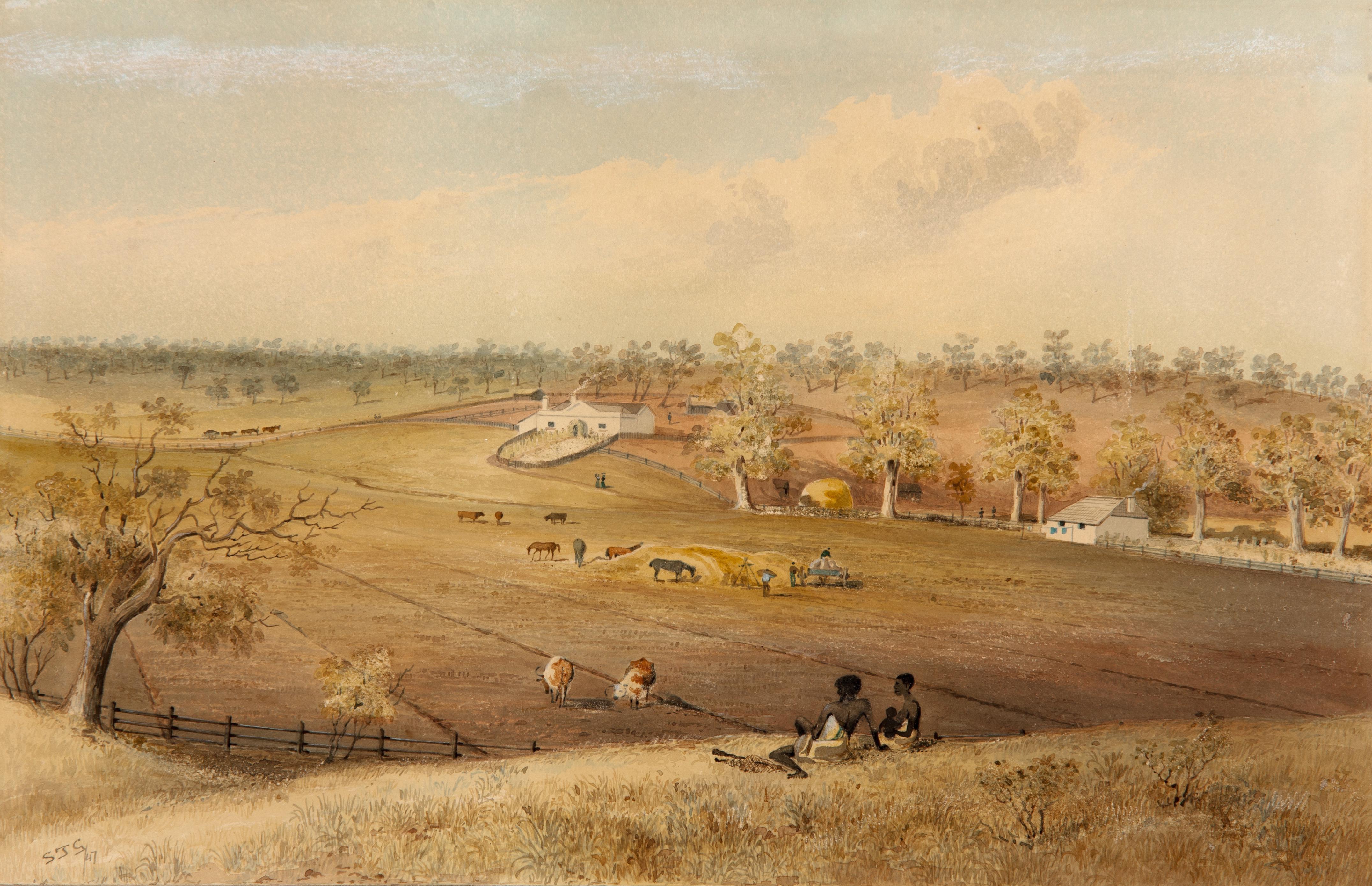
An overarching outline of 1847 with links to catalogue articles on Gill's major efforts that year. This article also includes 1847 works not catalogued elsewhere.
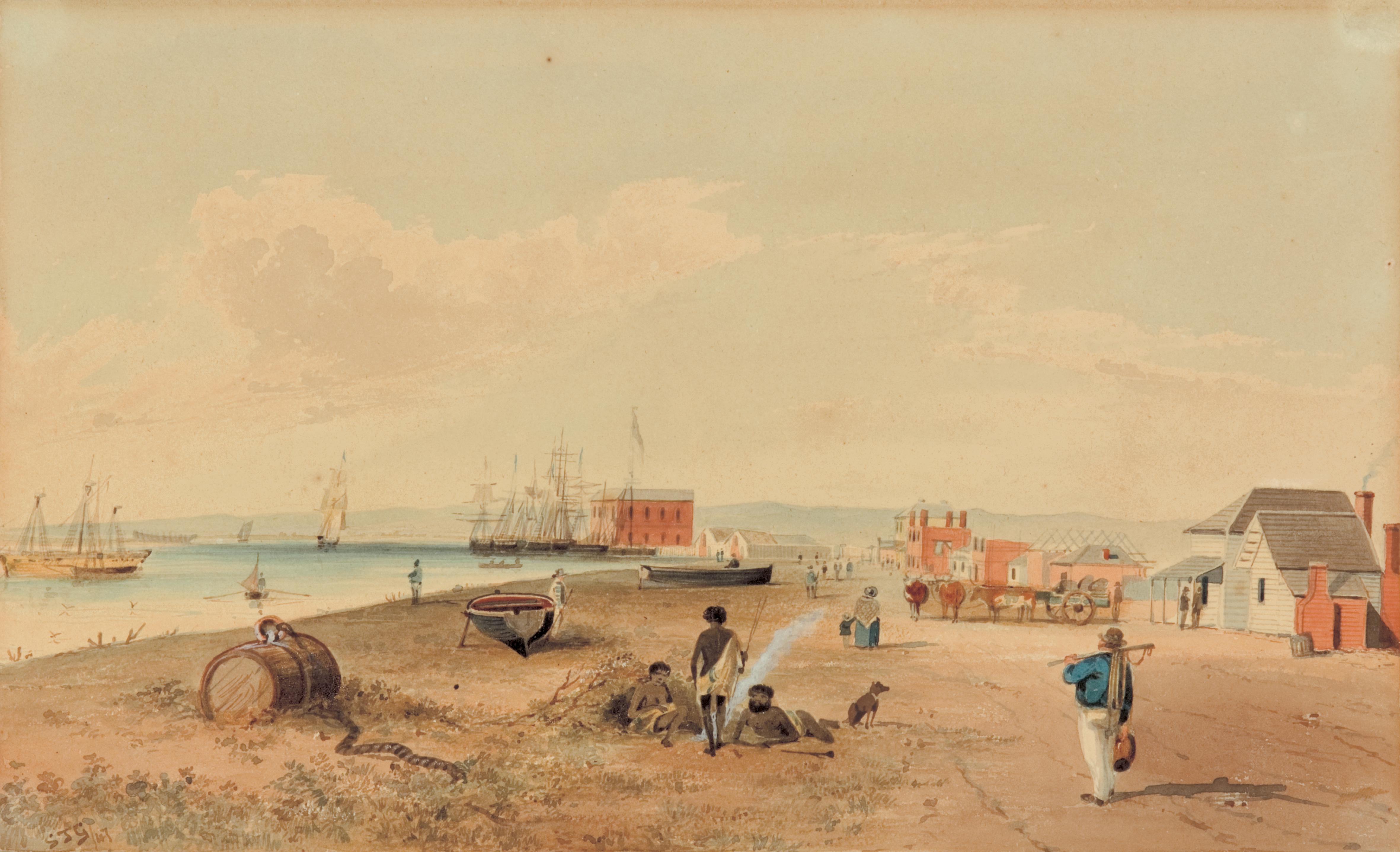
'An Exhibition of Pictures, principally the work of Colonial Artists' ran over a week from Thursday 11 February 1847 and showed 178 pictures. Gill was the most prolific exhibitor with 62 entries, including his 33 work Horrocks series.
1846/February 1847. Five vignettes showing activities of Aboriginal people. For George Hamilton who over-painted two of the pictures. Extensive reverse notes transcribed.
February-April 1847. To illustrate Charles Sturt's book 'Narrative of an Expedition into Central Australia ...'. Watercolours (known and unknown) by Gill.

In April 1847 S.T. Gill sketched the Burra Burra Mine and its township Kooringa on behalf of the South Australian Mining Association (SAMA). He made a set of seven views. Several SAMA proprietors ordered copy sets.
Winter 1847. 'The Seasons and The Months'. A series originally of 16 pictures commissioned by Lieutenant John Roe. 'July' is missing. Key to redating Gill's work.
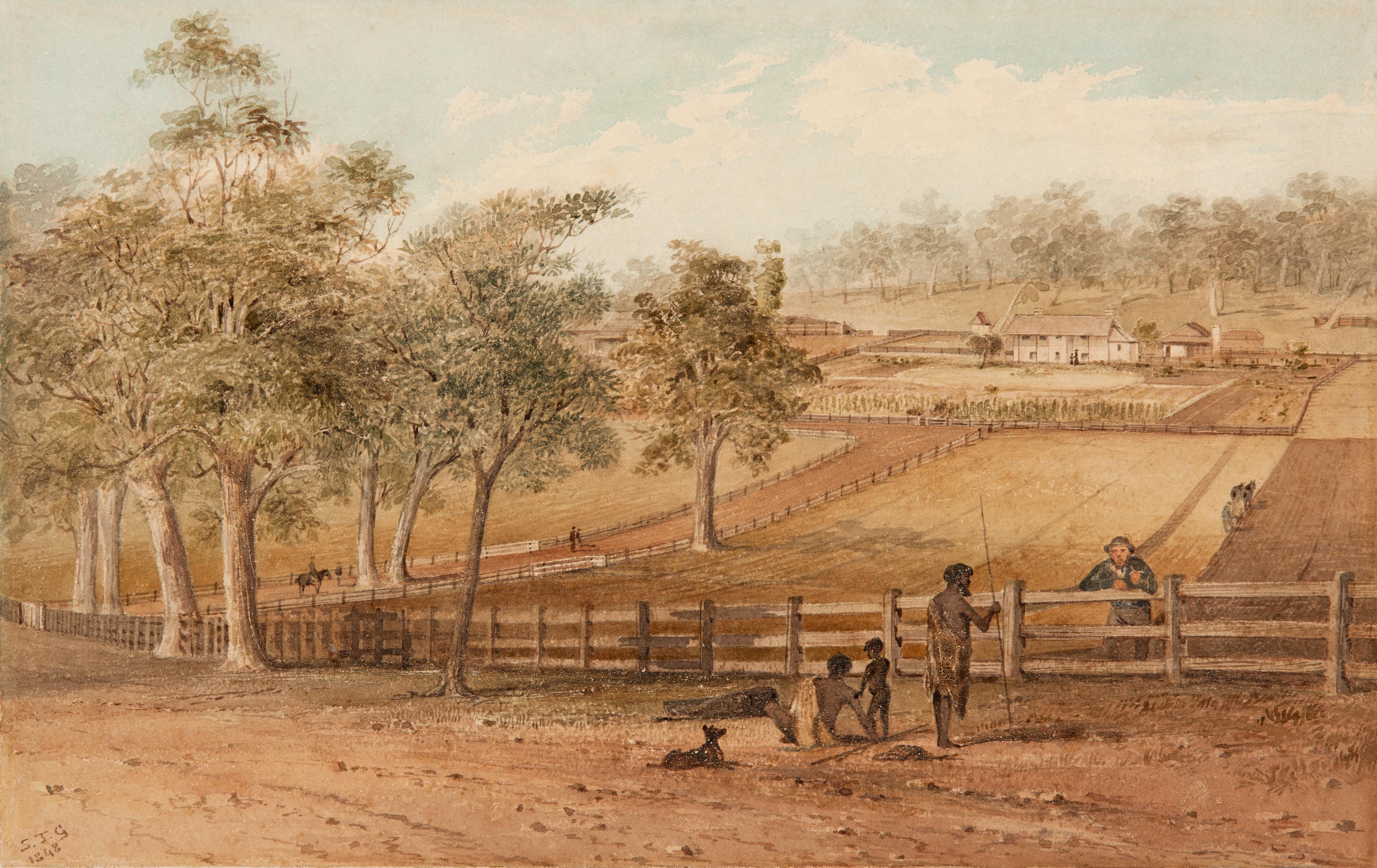
1848. Second exhibition of artists. Economic depression in Britain impacted Gill's moneyed clients. But year end heralded a broader market for Gill's works with the arrival in Adelaide of lithographers Penman and Co.
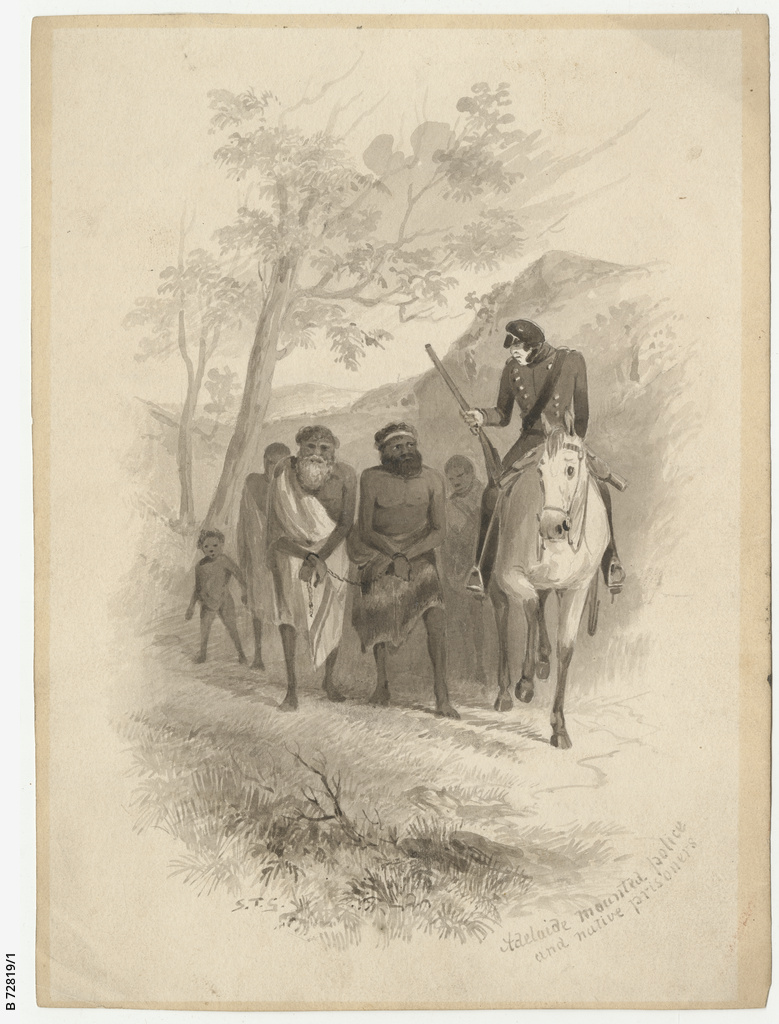
1849. Ten wash drawings of South Australian scenes - natural, Aboriginal, rural and exploration - likely for Captain John Bishop of Port Lincoln.
January 1849. Twelve wash drawings of South Australian scenes - natural, Aboriginal and rural - possibly intended for lithography.
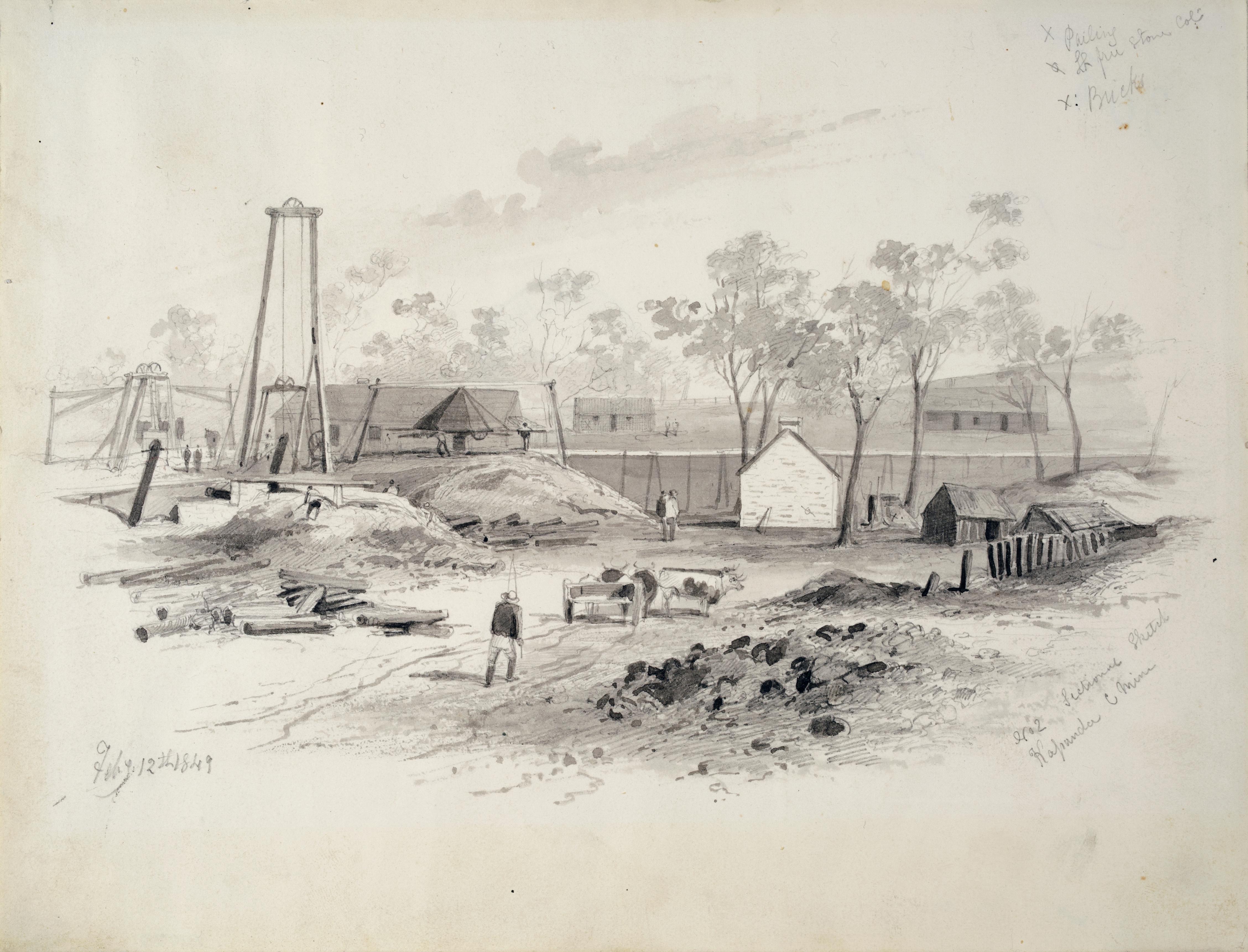
February 1849: Sectional sketches of Kapunda copper mine for Captain E.C. Frome, Surveyor General and Colonial Engineer.
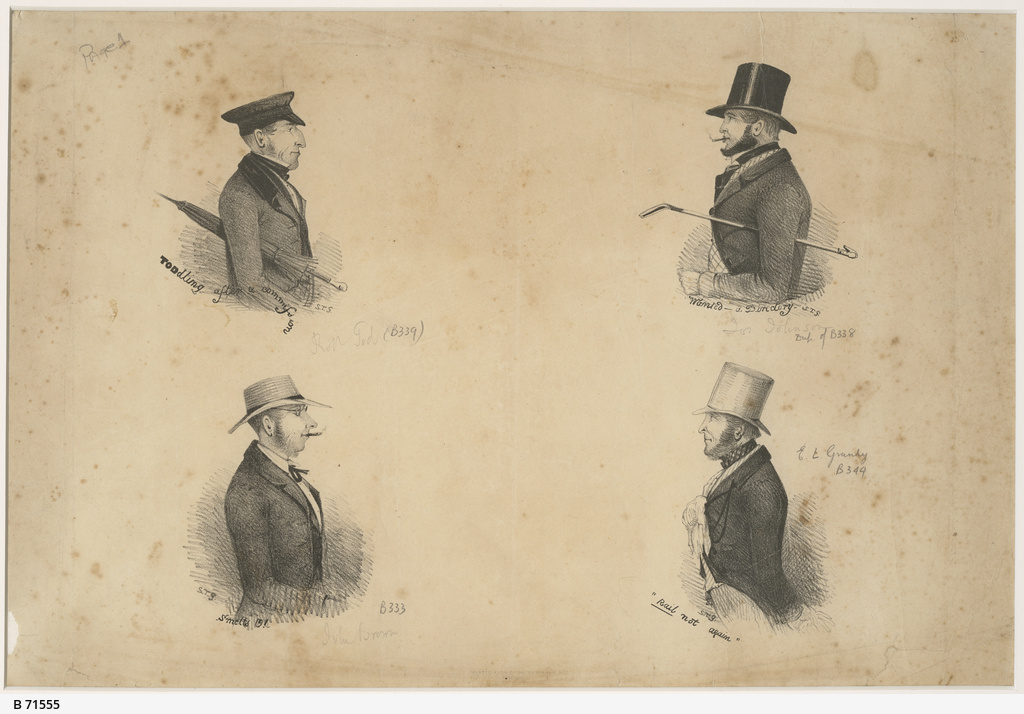
December 1848 - August 1849. Lithographers Penman & Co.; J.A. Gilfillan; T. Rider; Gill's 'Heads of the People' in May, July, August 1849.

September 1849 - February 1850. Fetes and house paintings. Gill embraced lithography and its larger market, whilst continuing watercolours for clients.
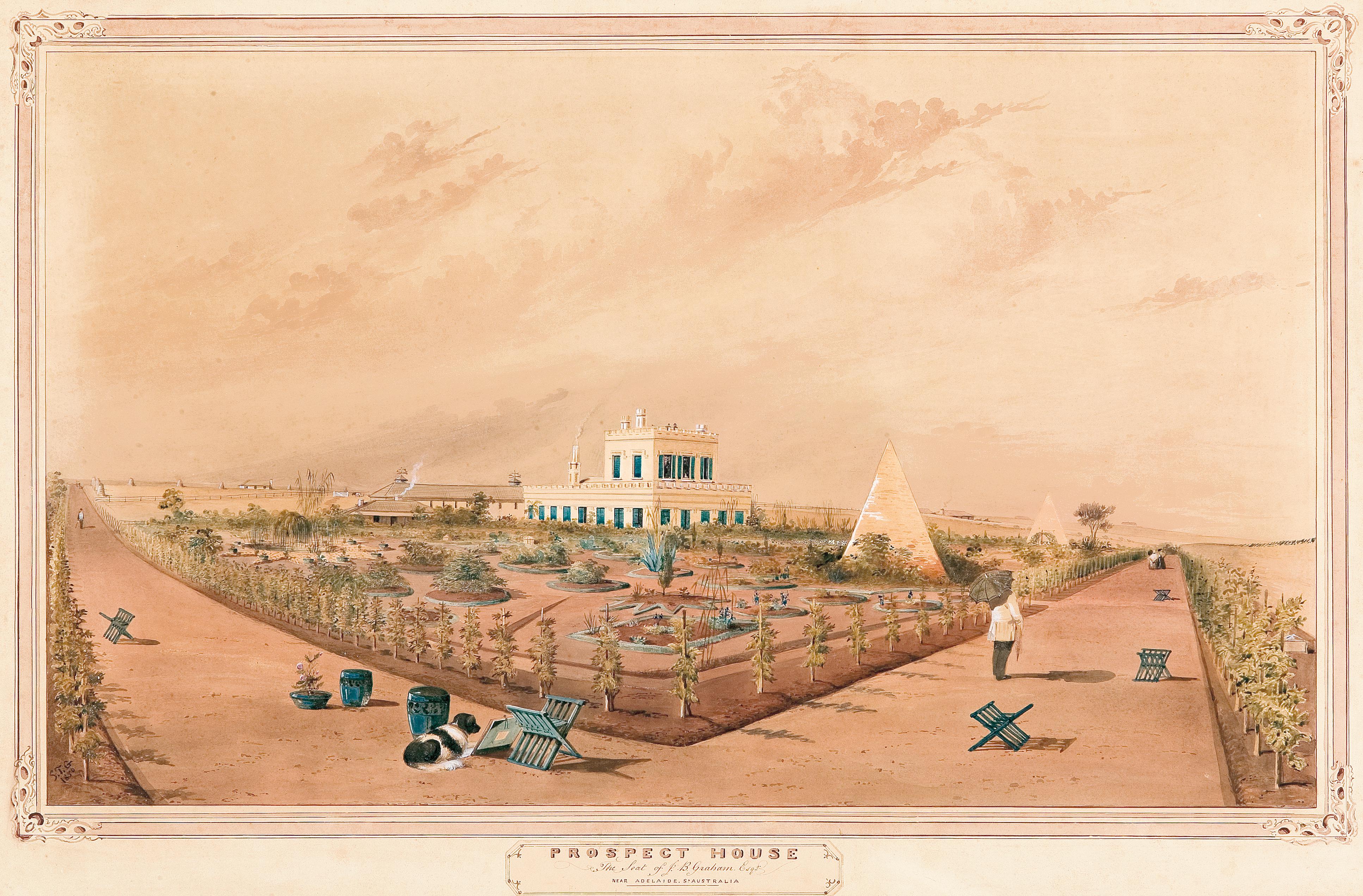
December 1849 - early 1850. A lithograph (Penman & Co.) of a fete at Prospect House on 20 December 1849. Five watercolours in 1850 of the house, grounds and setting for J.B. Graham.
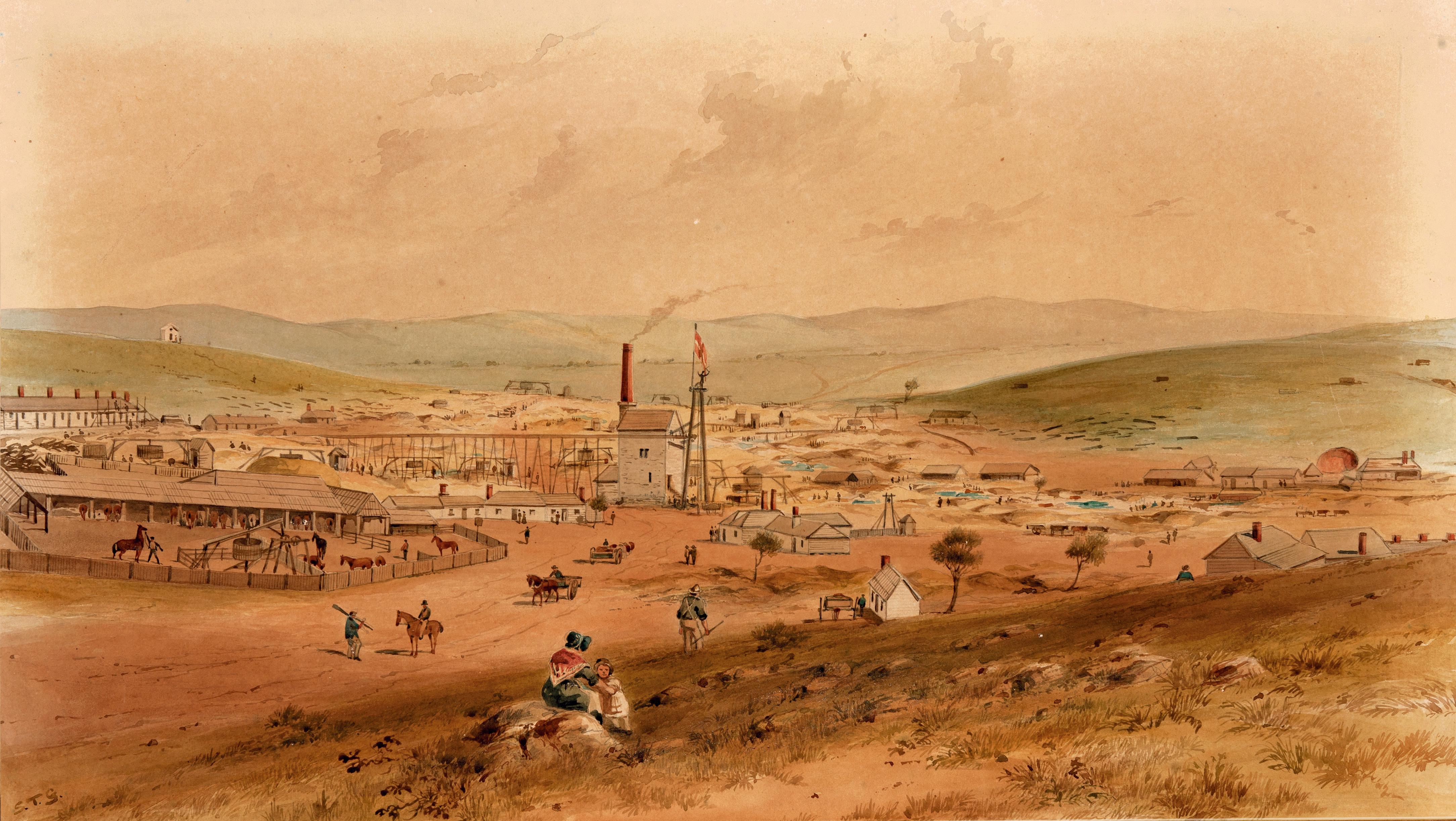
In February 1850 S.T. Gill returned to the Burra Burra Mine and its township Kooringa to refresh images for the South Australian Mining Association (SAMA). Featured: Patent Copper Company's smelting works and Roach's engine-house.
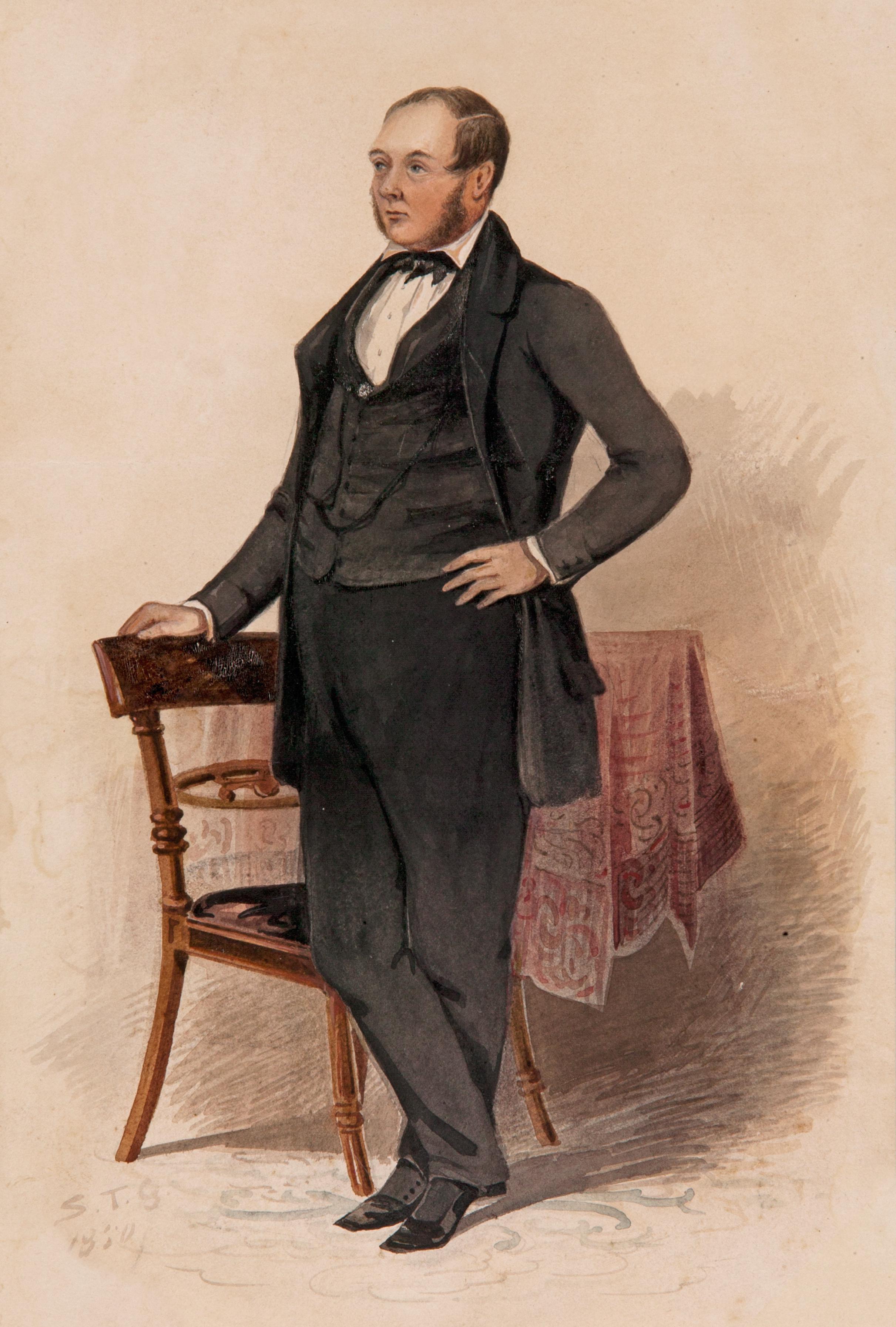
March 1850 to March 1851. Changing fortunes. Prospect House; Gill's Newfoundland dog; competition from oil painters; portraits from Daguerreotypes; Gill's hand injury; financial pressure; William Vansittart's horse portraits.
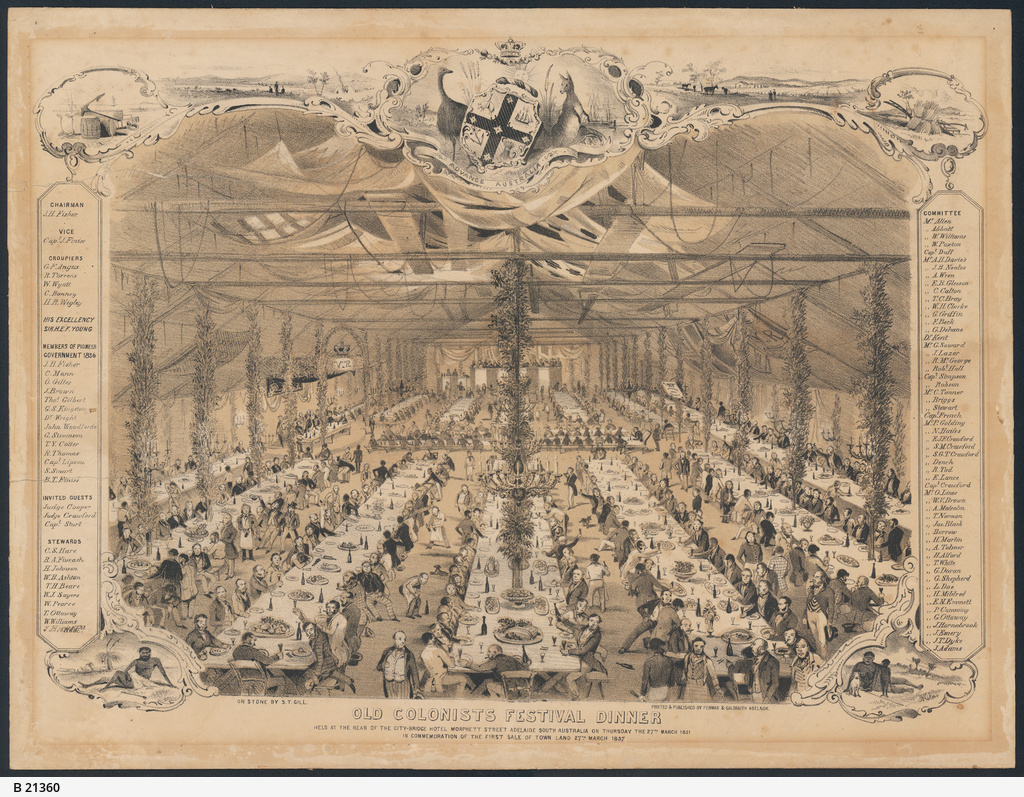
March 1851. The story behind S.T. Gill's cheeky lithograph of the Old Colonists' Festival Dinner.

Gold became the topic of interest in May 1851. Gill insolvent. Series of 3 lithographs of Adelaide's main streets, suggest the view was to the east and gold. Horse portraits. Angas paints NSW diggings.
S.T. Gill was at the Diggings in June and July 1852, judging by dated works and a newspaper report. He sought a lithographic partnership. There may be only one field sketch extant.

In Melbourne Gill completed two series of 24 monochrome diggings lithographs in August and October 1852. George French Angas visits! Large watercolours of Forest Creek and Bendigo. Large coloured lithograph of Forest Creek, March 1853.

Gill made preparatory sketches in only a small sketch book for each lithograph in his 'Sketches of the Victoria Diggings and Diggers as they are'. He scaled these to then draw on the stone.
Gill's 'Sketches of the Victoria Diggings and Diggers as they are' were published as lithographs by Macartney and Galbraith in 1852 in two parts. Part 1 was published in August 1852.
The weight of evidence is against Angas' presence at the Victorian diggings. He visited Gill in Melbourne in August 1852 and again used Gill's pictures for his own publication. This further cements the role of Gill as a ghost artist for Angas.
Gill's 'Sketches of the Victoria Diggings and Diggers as they are' were published as lithographs by Macartney and Galbraith in 1852 in two parts. Part 2 was published in October 1852.
The detail section lists each catalogue group and its art works. Click on the link to the catalogue group web page or an individual work on that page. From there you will find a further link to the art work in the collecting institution catalogue.
Works by S.T. Gill in the period 1839 to 1844, not included elsewhere in the catalogue.
1840. Two portraits of John Ainsworth Horrocks known only by early black and white photographs. I attribute them to Gill and date them to early 1840.
Previously attributed to Governor George Gawler, this is by Gill for Gawler in 1840/1841. The earliest known picture of new Government House. It's before Gill developed his typical foreground doodling and busyness of characters.
1840/1846. Simple postcard sized wash drawings labelled 'Series of Adelaide Views' and numbered (on the back) showing the built environment of Adelaide and the Port.
H. C. Jervis made engravings in Adelaide of landmark buildings in 1841-1842. Initials C.W.C on them became an art history red herring. More likely they're based on originals by S. T. Gill. There are links too with the 1842 Kingston map.
1844~. Set of 8 wash drawings of South Australian scenes - natural, Aboriginal, rural and the built environment, corresponding with subjects in J.F. Bennett's book. Plus other related works.
Lieutenant John Napier Magill (1819-1848), 96th Regiment, posted to South Australia 1842-1846. Magill was a flautist and artist, painting views of Flinders Street barracks. Gill watercolours for Magill and Captain W.D. Chard.
S. T. Gill was in the Barossa sketching for the Angas family from 29 October to 4 November 1844. I identify some works as well as influences on Angas publications 'South Australia Illustrated' and 'Barossa Range and its neighbourhood'.
1844/1845. Watercolours for Captain E.C. Frome, Surveyor General and Colonial Engineer.
Works by S.T. Gill in the period 1844 to 1846, not elsewhere included in the catalogue.
On 16 December 1844 explorer Edward John Eyre departs Adelaide on the barque 'Symmetry' for England, taking with him paintings by Gill.
WA Cawthorne (1824-1897): school teacher, amateur artist, documenter of Aboriginal culture. George French Angas' 'South Australia Illustrated'. The relationship with Gill, his art master from February 1845.
Analysis of a pencil sketch of the German village of Klemzig. A comparison of the Klemzig pictures of F.R. Nixon, G. F. Angas and S.T. Gill. I re-attribute the sketch from Angas to Gill, revealing more of the collaboration between them.
1844-45. George French Angas made a splash in South Australia in two visits (interrupted by a trip to New Zealand). He left on 2 July 1845, a fortnight after his art exhibition and its associated controversy.
September-November 1845. Series of watercolours and wash drawings commissioned by James Allen for his 1846 promotional lecture tour of England.
After the commission for James Allen and South Australian Company, in November 1845 Gill briefly trialled Daguerreotype (photography). Little is known about what he did next, up until the time he left on Horrocks' expedition in July 1846.
1844/1846. Eliezer Levi Montefiore – businessman and Gill student.
Some of Gill's pictures were used by George French Angas in London in 1846-1847: in his Egyptian Hall exhibition and his books South Australia Illustrated and Savage Life and Scenes.
S.T. Gill accompanied John Ainsworth Horrocks' small expedition from July to September 1846. This article focusses on Gill's artistic work on the expedition, rather than his exhibition works after returning.
September 1846 to January 1847. Gill develops his series of 33 works of the Horrocks' expedition, raffled and shown at the February 1847 Exhibition of Pictures.
An overarching outline of 1847 with links to catalogue articles on Gill's major efforts that year. This article also includes 1847 works not catalogued elsewhere.
'An Exhibition of Pictures, principally the work of Colonial Artists' ran over a week from Thursday 11 February 1847 and showed 178 pictures. Gill was the most prolific exhibitor with 62 entries, including his 33 work Horrocks series.
1846/February 1847. Five vignettes showing activities of Aboriginal people. For George Hamilton who over-painted two of the pictures. Extensive reverse notes transcribed.
February-April 1847. To illustrate Charles Sturt's book 'Narrative of an Expedition into Central Australia ...'. Watercolours (known and unknown) by Gill.
In April 1847 S.T. Gill sketched the Burra Burra Mine and its township Kooringa on behalf of the South Australian Mining Association (SAMA). He made a set of seven views. Several SAMA proprietors ordered copy sets.
Winter 1847. 'The Seasons and The Months'. A series originally of 16 pictures commissioned by Lieutenant John Roe. 'July' is missing. Key to redating Gill's work.
1848. Second exhibition of artists. Economic depression in Britain impacted Gill's moneyed clients. But year end heralded a broader market for Gill's works with the arrival in Adelaide of lithographers Penman and Co.
1849. Ten wash drawings of South Australian scenes - natural, Aboriginal, rural and exploration - likely for Captain John Bishop of Port Lincoln.
January 1849. Twelve wash drawings of South Australian scenes - natural, Aboriginal and rural - possibly intended for lithography.
February 1849: Sectional sketches of Kapunda copper mine for Captain E.C. Frome, Surveyor General and Colonial Engineer.
December 1848 - August 1849. Lithographers Penman & Co.; J.A. Gilfillan; T. Rider; Gill's 'Heads of the People' in May, July, August 1849.
September 1849 - February 1850. Fetes and house paintings. Gill embraced lithography and its larger market, whilst continuing watercolours for clients.
December 1849 - early 1850. A lithograph (Penman & Co.) of a fete at Prospect House on 20 December 1849. Five watercolours in 1850 of the house, grounds and setting for J.B. Graham.
In February 1850 S.T. Gill returned to the Burra Burra Mine and its township Kooringa to refresh images for the South Australian Mining Association (SAMA). Featured: Patent Copper Company's smelting works and Roach's engine-house.
March 1850 to March 1851. Changing fortunes. Prospect House; Gill's Newfoundland dog; competition from oil painters; portraits from Daguerreotypes; Gill's hand injury; financial pressure; William Vansittart's horse portraits.
March 1851. The story behind S.T. Gill's cheeky lithograph of the Old Colonists' Festival Dinner.
Gold became the topic of interest in May 1851. Gill insolvent. Series of 3 lithographs of Adelaide's main streets, suggest the view was to the east and gold. Horse portraits. Angas paints NSW diggings.
S.T. Gill was at the Diggings in June and July 1852, judging by dated works and a newspaper report. He sought a lithographic partnership. There may be only one field sketch extant.
In Melbourne Gill completed two series of 24 monochrome diggings lithographs in August and October 1852. George French Angas visits! Large watercolours of Forest Creek and Bendigo. Large coloured lithograph of Forest Creek, March 1853.
Gill made preparatory sketches in only a small sketch book for each lithograph in his 'Sketches of the Victoria Diggings and Diggers as they are'. He scaled these to then draw on the stone.
Gill's 'Sketches of the Victoria Diggings and Diggers as they are' were published as lithographs by Macartney and Galbraith in 1852 in two parts. Part 1 was published in August 1852.
The weight of evidence is against Angas' presence at the Victorian diggings. He visited Gill in Melbourne in August 1852 and again used Gill's pictures for his own publication. This further cements the role of Gill as a ghost artist for Angas.
Gill's 'Sketches of the Victoria Diggings and Diggers as they are' were published as lithographs by Macartney and Galbraith in 1852 in two parts. Part 2 was published in October 1852.
David Coombe, 2021-2026. Updated 4 August 2026. | text copyright (except where indicated)
CITE THIS: David Coombe, 2021-2026, S.T. Gill - Select Catalogue of Works, accessed dd mmm yyyy, <https://coombe.id.au/S_T_Gill/catalogue_of_works.htm>